Gyōji (行持) — Continuous Practice | PART SEVEN
“The true Face, Bones, and Marrow of Buddhas and Ancestors is not some thing that departs. It is a Tathagata’s having come in this way and having gone in that way. It is beyond some thing that comes. Even so, we invariably receive our allotment of spiritual nourishment through our ceaseless practice of one day.
Thus, a single day must be of great importance. Were you to live in idleness for a hundred years, you would regret the days and months you had wasted, and you would be a shell of a person, one to be pitied. Even if you were to gorge yourself as a slave to sight and sound for a hundred years, yet within that time you performed ceaseless practice for just one single day, not only would you be putting your whole life of a hundred years into the practice, you would also be helping ferry other hundred-year-old beings to the Other Shore. Your life of this one day is the life you should cherish, the skeleton you should prize. Thus, if your life were to last but a single day, if on that day you grasped what the Nature of all the Buddhas is, then that life of one day would have surpassed many lifetimes spanning vast eons. So, if you have not yet grasped the Matter, do not squander one day idly. This one day of ceaseless practice is a precious jewel that you should prize. Do not compare it with the value of some foot-wide gem, and never exchange it, even for the Black Dragon’s Jewel. Sages of old prized it even more than their whole life.
Quietly think about it. You can ask for the Black Dragon’s Jewel at any time, and can even get possession of a foot-wide gem along the way, but one day within a lifetime of a hundred years, once gone, cannot come again a second time. Is there any skillful means by which we can have returned to us even one day that has passed? That is something you do not find recorded in any book. Those who do not idly let time pass by wrap up their days and months in that skin bag of theirs so that the time will not leak away. This is why the saints of old and the former sages prized their days and months; they prized time more than they prized their own eyes and prized it more than their native land. To idly let time pass by means to be polluted and corrupted by the transient world of fame and gain. To not idly let time pass by means to act for the sake of the Path whilst being on the Path.
One who has already completely grasped the Matter will not let a day idly go by, but will do the practice for the sake of the Way and will explain the Way for the sake of the Way. Because of this, we have come to know the standards set by the Buddhas and Ancestors from ancient times, who did not vainly squander the efforts of even one day. This is something you should constantly reflect on. You should consider it even as you sit by a window, looking out on some slowly blossoming spring day, and do not forget it even as you sit in a humble abode on some desolate rainy night. How does time rob us of our efforts? Not only does it rob us of one day, it also robs us of the merits of many eons. What animosity is there between time and us? Sad to say, it will be our own lack of practice that robs us so. This is due to our not being on friendly terms with ourselves, to our thinking ill of ourselves. Even Buddhas and Ancestors have not been without Their loved ones, but They have let them go. Even Buddhas and Ancestors have not been without Their various involvements, but They have let them go. Even though we prize our relationships, such connections between ourselves and others are not things that can be held onto, so if we do not let go of our loved ones, chances are that our loved ones will let go of us, both in word and in deed. If you can have compassion for your loved ones, have compassion for them. To have compassion for our loved ones means letting go of them.”
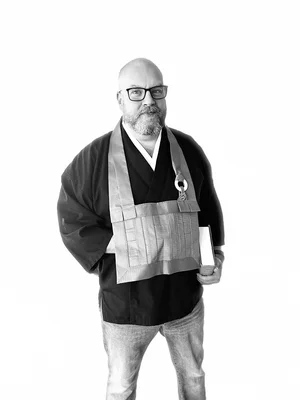
SENSEI MICHAEL BRUNNER COMMENTARY
We are brought here into something that removes any remaining abstraction from practice and places it directly into the fact of our life. The Face, Bones, and Marrow are not somewhere else, not something that arrives or departs. They are not waiting for us at the end of practice. They are this very life as it is being lived, and they are only ever received through ceaseless practice, one day at a time.
This shifts everything into immediacy. One day is not a small unit of time moving toward something greater. One day is complete. If it is lived in ceaseless practice, it contains the whole of the Way. If it is wasted, nothing replaces it. We tend to think in terms of accumulation, that we will make up for what is lost, that we will practice more later, that there will be another opportunity. But a single day, once gone, does not return. There is no exchange, no recovery, no compensation.
This is why the comparison is so stark. A hundred years lived without practice becomes empty, something that will be regretted, something that never actually came to life. And yet a single day of ceaseless practice is not only complete in itself, it carries the whole of a lifetime within it. It is not measured by duration, but by whether it is actualized.
What is being cut through here is our tendency to delay. To imagine that practice will happen when conditions are better, when we are more prepared, when something resolves. But this day is the only place practice can occur. Not tomorrow, not later, not in some improved version of our life. This day.
This is why time is treated with such gravity. It is not an enemy in itself. It does not rob us. What is being revealed is that we are the ones letting it pass unused. When we are not practicing, when we are distracted by gain, by reputation, by attachment, we are the ones allowing this life to slip away. The loss is not imposed from the outside. It is created through our own division.
This becomes even more direct when it turns to attachment. Relationships, responsibilities, involvements, none of these are denied. They are part of this life. But they cannot be held onto as something fixed. The moment we try to secure them, we create suffering. To have compassion for those we love is not to cling to them, but to allow them to be as they are, without trying to possess or preserve them.
So ceaseless practice is not separate from time, and it is not separate from relationship. It is the way we meet both without grasping. Without postponing. Without holding anything back.
This brings it to a very clear point. This day is not replaceable. It is not repeatable. It is not something we can set aside. The question is not how long we will live, or what we will accomplish, but whether this day is being lived completely. Because if it is, nothing is lacking. If it is not, nothing else will fill that gap.