Gyōji (行持) — Continuous Practice | PART SIX
“Meditation Master Daiji Kanchū once said, “Explaining what one yard is cannot compare with putting one foot into action, and explaining what one foot is cannot compare with putting one inch into action.” This sounds like Kanchū was admonishing people of his time who were being negligent in their ceaseless practice and who had forgotten about mastering the Buddha’s Way. But it does not mean that it is incorrect to explain what one yard is: it means that putting one foot into practice takes more skill than explaining what one yard is. Why should we be limited to measurements in yards and feet? There could also be discussions about the comparative merits of far-off Mount Sumeru and a poppy seed. Sumeru is completely whole and a poppy seed is completely whole. The important point in ceaseless practice is just like this. The present explanation is not the way Kanchū put it, and it is the way Kanchū put it.
Great Master Tōzan Gohon once said, “I put into words what I am unable to demonstrate by action, and I demonstrate by action what I am unable to put into words.” This is the way a lofty Ancestor put it. His point is that his practice illumines the path that makes understandable what he has put in words, and his explanations have pathways that make understandable what he does as practice. Hence, what he preached in a day is what he practiced in a day. The point of this is that we practice that which is difficult to practice, and we explain that which is difficult to explain.
Ungo Dōyō, having penetrated through and through what Tōzan had expressed, said, “At the time for explanation, there is no path for practice: at the time for practice, there is no path for explanation.” This way of putting it is not saying that there is no practice or explanation. His ‘time for explanation’ is synonymous with one’s ‘not leaving the monastery even once in a lifetime’. His ‘time for practice’ is synonymous with the hermit’s washing his head and then coming before Seppō. Do not disregard or treat lightly his expression, “At the time for explanation, there is no path for practice: at the time for practice, there is no path for explanation.” This is something that Buddhas and Ancestors of the past have continually asserted. It was once expressed in verse as:
Were you to live a hundred years
Yet fail to see what the Nature of all Buddhas is,
It would still not equal living even one day,
Having rightly grasped the Matter.This is not something that one or two Buddhas have said: it is what all Buddhas are continually putting into words and putting into practice. Within the recurring cycles of birth and death over hundreds and thousands of myriad eons, one day in which there is ceaseless practice is a bright pearl within the topknot of the king: it is the Ancient Mirror within which we are born and die, and it is a day we should rejoice in. The strength of our ceaseless practice is a joy in itself. Those who have not yet attained the strength of ceaseless practice or received the Bones and Marrow of an Ancestor of the Buddha do not prize the Body and Mind of Buddhas and Ancestors or take delight in the True Face of Buddhas and Ancestors.”
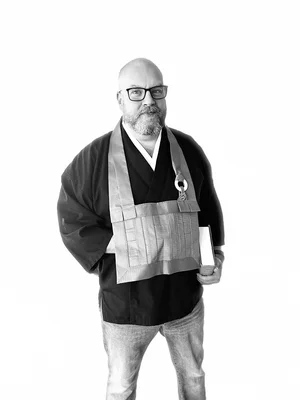
SENSEI MICHAEL BRUNNER COMMENTARY
We are brought here into a very precise correction. It is not a rejection of teaching, and it is not a rejection of understanding, but it places everything in its proper order. To explain a yard is easy. To take a single step is something else entirely. The difference is not in quantity, it is in reality. One belongs to description, the other to actualization.
This is where we can very easily deceive ourselves. We can speak clearly, we can understand the structure of the teachings, we can even articulate them in a way that sounds complete. But none of that moves the Way forward even an inch if it is not lived. At the same time, this is not dismissing explanation. It is placing it within practice. Explanation has its place, but it cannot substitute for the step that must be taken.
The image of Sumeru and the poppy seed cuts through our sense of scale. We tend to think in terms of big and small, advanced and basic, profound and simple. But each is complete. The question is not how large or how impressive something is. The question is whether it is actualized. One inch lived completely is not less than a thousand miles explained.
Then it turns again and deepens. Expression and action are not separate. When it is said that what cannot be demonstrated is put into words, and what cannot be put into words is demonstrated, this is not describing two different domains. It is showing how they illuminate one another when they are not divided. What is spoken must be lived. What is lived gives life to what is spoken. When these are separated, both collapse into something partial.
This is where the statement that at the time of explanation there is no path for practice, and at the time of practice there is no path for explanation, becomes very direct. It is not denying either. It is removing the overlap that we create. When we are speaking, we are fully speaking. When we are practicing, we are fully practicing. There is no second track running alongside it, no commentary, no self-measurement, no attempt to hold both at once.
This brings it back into time, but not in the way we usually understand it. One day of ceaseless practice outweighs a hundred years lived without it. Not because time is being measured differently, but because a single day fully lived is complete. It is not divided. It is not postponed. It is not waiting for something else to confirm it.
This is why it is described as a bright pearl, as an ancient mirror. It is not something added to life. It is life when it is no longer obscured. The joy that is spoken of here is not emotional or circumstantial. It is the strength of practice itself when it is no longer being diluted by hesitation, by division, by holding back.
So the question becomes very immediate. Are we explaining, or are we stepping? Are we measuring, or are we actualizing? Because ceaseless practice is not something that can be accumulated through understanding. It must be lived, directly, in the way this moment is taken up, without remainder.