Dhammapada Reflections | Part Fourteen | Chapter Twenty-Four
CHAPTER 24
CRAVING
24:1 The craving of one given to heedless living grows like a creeper. Like the monkey seeking fruits in the forest, he leaps from life to life, tasting the fruit of his kamma.
24:2 Whoever is overcome by this wretched and sticky craving, his sorrows grow like grass after the rains.
24:3 But whoever overcomes this wretched craving, so difficult to overcome, from him sorrows fall away like water from a lotus leaf.
24:4 This I say to you: Good luck to all assembled here! Dig up the root of craving, like one in search of the fragrant root of the birana grass. Let not Mara crush you again and again, as a flood crushes a reed.
24:5 Just as a tree, though cut down, sprouts up again if its roots remain uncut and firm, even so, until the craving that lies dormant is rooted out, suffering springs up again and again.
24:6 The misguided man in whom the thirty-six currents of craving strongly rush toward pleasurable objects is swept away by the flood of his passionate thoughts.
24:7 Everywhere these currents flow, and the creeper of craving sprouts and grows. Seeing that the creeper has sprung up, cut off its root with wisdom.
24:8 Flowing in from all objects and watered by craving, feelings of pleasure arise in beings. Bent on pleasures and seeking enjoyment, these men fall prey to birth and decay.
24:9 Beset by craving, people run about like an entrapped hare. Held fast by mental fetters, they come to suffering again and again for a long time.
24:10 Beset by craving, people run about like an entrapped hare. Therefore, one who yearns to be passion-free should destroy his own craving.
24:11 There is one who, turning away from desire for household life, takes to the life of the forest, that is, of a monk. But after being freed from the household, he runs back to it. Behold that man! Though freed, he runs back to that very bondage!
24:12–13 That is not a strong fetter, the wise say, which is made of iron, wood, or hemp. But the infatuation and longing for jewels and ornaments, children and wives, that, they say, is a far stronger fetter, which pulls one downward and, though seemingly loose, is hard to remove. This, too, the wise cut off. Giving up sensual pleasure, and without any longing, they renounce the world.
24:14 Those who are lust-infatuated fall back into the swirling current of samsara like a spider on its self-spun web. This, too, the wise cut off. Without any longing, they abandon all suffering and renounce the world.
24:15 Let go of the past, let go of the future, let go of the present, and cross over to the farther shore of existence. With mind wholly liberated, you shall come no more to birth and death.
24:16 For a person tormented by evil thoughts, who is passion-dominated and given to the pursuit of pleasure, his craving steadily grows. He makes the fetter strong, indeed.
24:17 He who delights in subduing evil thoughts, who meditates on the impurities and is ever mindful, it is he who will make an end of craving and rend asunder Mara’s fetter.
24:18 He who has reached the goal, is fearless, free from craving, passionless, and has plucked out the thorns of existence, for him this is the last body.
24:19 He who is free from craving and attachment, is perfect in uncovering the true meaning of the Teaching, and knows the arrangement of the sacred texts in correct sequence, he, indeed, is the bearer of his final body. He is truly called the profoundly wise one, the great man.
24:20 A victor am I over all, all have I known. Yet unattached am I to all that is conquered and known. Abandoning all, I am freed through the destruction of craving. Having thus directly comprehended all by myself, whom shall I call my teacher?
24:21 The gift of Dhamma excels all gifts; the taste of the Dhamma excels all tastes; the delight in Dhamma excels all delights. The Craving-Freed vanquishes all suffering.
24:22 Riches ruin only the foolish, not those in quest of the Beyond. By craving for riches the witless man ruins himself as well as others.
24:23 Weeds are the bane of fields, lust is the bane of mankind. Therefore, what is offered to those free of lust yields abundant fruit.
24:24 Weeds are the bane of fields, hatred is the bane of mankind. Therefore, what is offered to those free of hatred yields abundant fruit.
24:25 Weeds are the bane of fields, delusion is the bane of mankind. Therefore, what is offered to those free of delusion yields abundant fruit.
24:26 Weeds are the bane of fields, desire is the bane of mankind. Therefore, what is offered to those free of desire yields abundant fruit.
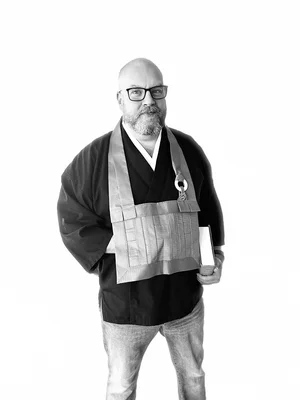
SENSEI MICHAEL COMMENTARY
CHAPTER XXIV | CRAVING
Chapter twenty-four begins with the curious image of craving growing like a creeper and the heedless person moving through the forest like a monkey searching from fruit to fruit. Craving is often mistaken for simple appetite, but the movement is much larger than wanting something pleasant. We crave sensual pleasure, continued existence, and annihilation. We want something we do not have, we want something we have to remain, or we want something that has appeared to disappear. In each case the movement is the same: things-as-they-are are not acceptable, so mind reaches toward a world it would prefer. The gap opens again, and craving is the activity that continually reaches across it.
This does not mean that preference is a problem in and of itself. We prefer food when we are hungry and warmth when we are cold. We make plans, cultivate relationships, build temples, raise children, and work to change circumstances that cause suffering. The problem begins when preference becomes a demand that reality conform before we are willing to inhabit it. Something pleasant appears and we insist that it continue. Something painful appears and we insist that it leave. Something uncertain appears and we rush to make it certain. The karmic self is constantly negotiating with the living world, offering its terms for participation, and the Dhammapada tells us that the resulting sorrows grow like grass after the rains.
They grow because satisfying craving does not close the gap; it only reinforces it. When we get what we wanted, the pleasure is quickly quelled by the possibility of losing it. When we fail to get what we wanted, the imagined object gathers even more power. When we finally remove the thing we could not tolerate, something else eventually appears that should not be here. The problem was never entirely contained in the object. The creeper simply found another place to climb.
The Dhammapada keeps pointing us toward the root. A tree can be cut down and still sprout again when the root remains firm. We can change jobs, end relationships, give away possessions, and still discover the same movement waiting for us. The scenery can change completely while the structure of our suffering remains untouched. This is particularly important in practice because spiritual life gives craving an entirely new collection of objects. We can crave realization, purity, and special experiences. We crave the assurance that we have finally become the sort of person who no longer craves anything.
The desire to annihilate what we do not like is still craving. Anger appears and we want a life in which anger no longer arises. Desire appears and we want to become someone without desire. Grief appears and we begin measuring ourselves against an imagined person who has transcended grief. Even the karmic self can become an object we are determined to destroy. Now the same activity that once chased sensual pleasure has simply put on robes. We are still demanding that what has appeared become something else.
This is where Mentation-practice can become another way of watering the root. We begin with an idea of awakening and then use practice to force experience into conformity with it. We decide what a calm mind should feel like, what a compassionate person should think, what enlightenment should exclude, and then begin cutting away whatever does not belong in the picture. Amputation is never an option. The work is not to destroy the experiences that have arisen, but to see the grasping movement that immediately wants to possess, preserve, or remove them. If we only cut the branches, the root remains underground waiting for another season.
The image of the thirty-six currents gives craving another shape. A current carries us. Something appears through eye, ear, nose, tongue, body, or mind, and almost instantly experience begins moving. Pleasure is followed by reaching. Pain is followed by resistance. A thought is followed by a story about the thought, and before long we are far downstream from what actually appeared. We usually become interested in the object at the end of the current, but practice asks us to become intimate with the movement itself. Where did the reaching begin? At what point did pleasure become possession? When did uncertainty become fear, or memory become a demand that the future repair the past?
Pleasure itself does not have to become a problem. We can enjoy a meal without demanding that it save us. We can love someone without making that person responsible for stabilizing our world. We can enjoy beauty without plucking every flower we see. Trouble begins when a living experience is recruited into the service of maintaining the karmic self. Then pleasure has a job. It must continue, reassure, repeat, prove something, or protect us from whatever we fear will happen when it ends. The living experience disappears beneath the structure we build around it.
The trapped hare is a wonderful image for what follows. The hare runs everywhere, but its running does not amount to freedom. We can do the same thing for an entire lifetime. We change circumstances, collect experiences, rearrange relationships, and cross enormous distances while remaining held by the same demand. There can be tremendous activity with almost no movement at all. The farther shore remains distant because we keep carrying the near shore with us.
The person who leaves household life for the forest and then runs back again makes the point even more directly. The household was never the only bondage, and the forest was never automatically freedom. We can renounce one environment while carrying the same construction into the next. A monastery can become another house for the karmic self just as easily as a suburban kitchen. We can become attached to renunciation, attached to simplicity, attached to being unattached. The house-builder has not gone anywhere. It has simply learned Buddhist vocabulary.
Then we meet the spider, caught in its own self-spun web. This may be one of the clearest images in the entire Dhammapada for the karmic reality we have been discussing from the beginning. The web was not imposed upon the spider from some foreign place. The spider made it. In the same way, we take what appears and spin judgment, memory, fear, longing, certainty, and imagined future through it until an entire world has been woven. Eventually we become trapped inside the world we created and experience it as though it were simply given. Resentment and fear know the road because they created it.
The fact that the web is self-spun does not mean that everything that happens to us is our fault. Causes and conditions arrive from everywhere, as we saw with the elephant. We do not choose every circumstance that enters our life, but we participate in what is made from those circumstances now. The spider does not control the whole forest, but the web is still its activity. This is why responsibility is liberating rather than accusatory. If the web were entirely imposed from somewhere outside, we would have no way to work with it. Because the spinning is happening here, transformation can also happen here.
Creation itself is not the problem. Mind creates constantly, and we need this creative capacity in order to live. We create language, plans, relationships, vows, art, institutions, and entire worlds of shared meaning. The mistake is not having these creations. The mistake is confusing them with what is ultimately there. Once we forget that the web is a web, every strand begins to look like necessity. We start saying, “This is simply how things are,” when what we often mean is, “This is how things look from inside the world I have constructed.”
Prajñā cuts at the root because it sees creation before creation hardens into certainty. Something pleasant appears before it becomes mine. Something painful appears before it becomes unacceptable. Something uncertain appears before we decide what it means. This is what I mean when I sometimes hear prajñā functioning as something like “before knowing.” It is not stupidity or the absence of discernment. It is intimacy with the vital veritas of lived experience before manufactured knowledge has finished telling us what the experience must become.
The Dhammapada then gives an instruction that can easily be reduced to another mindfulness slogan: “Let go of the past, let go of the future, let go of the present.” Past and future are familiar targets. We know how regret and anticipation can carry us away, so we are often told to return to the present moment. But the verse does not allow us to stop there. The present has to be released as well, because even “now” can become another object for the karmic self to possess.
We can make a spiritual ideal out of being present and then begin measuring experience against it. A memory appears and we decide we have left the present. Planning appears and we tell ourselves we are no longer here. We watch the mind for evidence that it has wandered and quietly create another division between the present we think we should inhabit and the experience that is actually occurring. Once again the gap opens. The vital veritas of lived experience is not a tiny section of time called “the present moment” that we have to hold onto. Past and future only ever appear here. Memory appears here. Anticipation appears here. Everything is arising in this boundless immediacy, and there is nowhere outside it for us to go.
All space and time is right here. There is nowhere else to look. This does not mean that we cannot remember yesterday or plan for tomorrow. It means that neither yesterday nor tomorrow exists somewhere outside this living activity and waits for us to travel there. Even the idea of “now” is something we can construct and then try to inhabit. When we let go of past, future, and present, we are not left floating outside time. We finally stop trying to possess time.
The farther shore appears here again, but we should remember our earlier Dharma Math. The farther shore does not become closer because we run harder toward it. Running can be the very activity that keeps it distant. If craving is the insistence that freedom lies somewhere beyond the circumstances presently given, then every effort to reach freedom through craving reproduces the distance. We cross when the grasping activity that divided the shores releases its claim.
Near the end of the chapter, the Buddha says, “Having thus directly comprehended all by myself, whom shall I call my teacher?” This might sound strange after everything we have said about teacher, Sangha, and lineage, but there is no contradiction. Teachers are indispensable precisely because awakening cannot be borrowed from them. A teacher points, challenges, corrects, and sometimes sees the web we have been staring through for years without noticing. Forms are transmitted, vows are inherited, and practice is carried from one generation to the next, but the living truth cannot be passed from hand to hand like an object.
At some point we have to see. If realization remains something true because our teacher said it was true, then it has become another certainty for the karmic self to inhabit. The spoon can sit in the soup forever and never taste it. The robe cannot practice. A title cannot awaken. Lineage matters because Dharma is carried through living relationship, but relationship reaches fulfillment when what has been pointed toward becomes directly visible. A teacher cannot lend us awakening any more than another person can breathe in our place.
The chapter closes in the field. Lust, hatred, delusion, and desire are compared to weeds, and once again we are being directed beneath the surface. The field is not condemned because weeds have appeared. We do not set fire to the field and declare ourselves free of weeds. We learn what is growing, where it took root, and what conditions continue feeding it. The same soil that nourishes the weed can nourish something else when we work with it skillfully.
Craving keeps asking the living world to become something different before we agree to live in it. Give me this. Let me remain. Make this disappear. From those movements we spin a web and then forget that we spun it. Practice does not give us a better web. It allows us to recognize the threads as threads, the construction as construction, and the root beneath the branches.
When the root is seen clearly, we no longer have to spend our lives running from fruit to fruit, cutting down the same tree, or fighting our way through a web of our own making. The living world was never asking to be conquered. It was waiting for us to stop demanding that it become something else to engage with it.