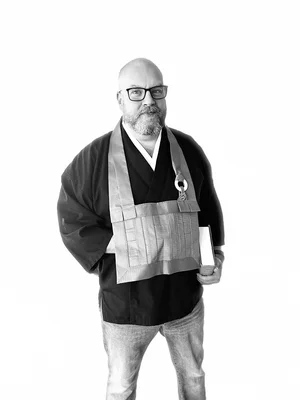
Dhammapada Reflections | Part Thirteen | Chapters Twenty-Two & Twenty-Three
CHAPTER 22
THE STATE OF WOE
22:1 The liar goes to the state of woe; also he who, having done wrong, says, “I did not do it.” Men of base actions both, on departing, share the same destiny in the other world.
22:2 There are many evil characters and uncontrolled men wearing the saffron robe. These wicked men will be born in states of woe because of their evil deeds.
22:3 It would be better to swallow a red-hot iron ball, blazing like fire, than, as an immoral and uncontrolled monk, to eat the alms of the people.
22:4 Four misfortunes befall the reckless man who consorts with another’s wife: acquisition of demerit, disturbed sleep, ill repute, and rebirth in states of woe.
22:5 Such a man acquires demerit and an unhappy birth in the future. Brief is the pleasure of the frightened man and woman, and the king imposes heavy punishment. Hence, let no man consort with another’s wife.
22:6 Just as kusa grass wrongly handled cuts the hand, even so, a recluse’s life wrongly lived drags one to states of woe.
22:7 Any loose act, any corrupt observance, any life of questionable celibacy, none of these bear much fruit.
22:8 If anything is to be done, let one do it with sustained vigor. A lax monastic life stirs up the dust of passions all the more.
22:9 An evil deed is better left undone, for such a deed torments one afterwards. But a good deed is better done, doing which one repents not later.
22:10 Just as a border city is closely guarded both within and without, even so, guard yourself. Do not let slip this opportunity for spiritual growth. For those who let slip this opportunity grieve indeed when consigned to hell.
22:11 Those who are ashamed of what they should not be ashamed of, and are not ashamed of what they should be ashamed of, upholding false views, go to states of woe.
22:12 Those who see something to fear where there is nothing to fear, and see nothing to fear where there is something to fear, upholding false views, go to states of woe.
22:13 Those who imagine evil where there is none, and do not see evil where it is, upholding false views, go to states of woe.
22:14 Those who discern the wrong as wrong and the right as right, upholding right views, go to realms of bliss.
CHAPTER 23
THE ELEPHANT
23:1 As an elephant in the battlefield withstands arrows shot from bows all around, even so shall I endure abuse. There are many, indeed, who lack virtue.
23:2 A tamed elephant is led into a crowd, and the king mounts a tamed elephant. Best among men is the subdued one who endures abuse.
23:3 Excellent are well-trained mules, thoroughbred Sindhu horses, and noble tusker elephants. But better still is the man who has subdued himself.
23:4 Not by these mounts, however, would one go to the Untrodden Land, Nibbana, as one who is self-tamed goes by his own tamed and well-controlled mind.
23:5 Musty during rut, the tusker named Dhanapalaka is uncontrollable. Held in captivity, the tusker does not touch a morsel, but only longingly calls to mind the elephant forest.
23:6 When a man is sluggish and gluttonous, sleeping and rolling around in bed like a fat domestic pig, that sluggard undergoes rebirth again and again.
23:7 Formerly this mind wandered about as it liked, where it wished and according to its pleasure, but now I shall thoroughly master it with wisdom as a mahout controls with his ankus an elephant in rut.
23:8 Delight in heedfulness! Guard well your thoughts! Draw yourself out of this bog of evil, even as an elephant draws himself out of the mud.
23:9 If for company you find a wise and prudent friend who leads a good life, you should, overcoming all impediments, keep his company joyously and mindfully.
23:10 If for company you cannot find a wise and prudent friend who leads a good life, then, like a king who leaves behind a conquered kingdom, or like a lone elephant in the elephant forest, you should go your way alone.
23:11 Better it is to live alone; there is no fellowship with a fool. Live alone and do no evil; be carefree like an elephant in the elephant forest.
23:12 Good are friends when need arises; good is contentment with just what one has; good is merit when life is at an end; and good is the abandoning of all suffering through Arahatship.
23:13 In this world, good it is to serve one’s mother, good it is to serve one’s father, good it is to serve the monks, and good it is to serve the holy men.
23:14 Good is virtue until life’s end, good is faith that is steadfast, good is the acquisition of wisdom, and good is the avoidance of evil.
SENSEI MICHAEL COMMENTARY
CHAPTER XXII-XXIII | THE STATE OF WOE & THE ELEPHANT
Chapter twenty-two begins with the liar, someone who has done something and then says, “I did not do it.” We could hear this merely as a prohibition against dishonesty, but something much more nuanced is happening.
Events occurred, and I participated in their occurring, but if what happened threatens the karmic self I have constructed, then what is plainly here becomes uncomfortably incongruent with my story. A division immediately appears between what happened and what I need to have happened, between the person who acted and the person I insist that I am. Responsibility has to be moved somewhere else. “Someone misunderstood me; circumstances forced me. You caused me to act this way.” The liar creates self and other even around his own activity, pushing blame outside the gate and then standing inside as though nothing happened.
This is already the beginning of the state of woe. Suffering forms in the gap between things-as-they-are and things-as-we-think-they-should-be. The greater the gap, the greater the arcs of suffering that cross the void. Something happens that does not conform to the reality we have constructed, and instead of allowing the construction to give way, we begin rearranging what happened. We explain, defend, remember selectively, assign blame, and eventually become inhabitants of the very world we created to protect ourselves. We abscond from the throne of our own mind-kingdom and then wonder why we have become powerless to transform what follows.
Whatever else we may believe about future heavens and hells, this much is clear: we create our own hell when we divide this way. Hell does not have to be added to the act as punishment from some foreign place; the act itself creates the conditions in which the chasm of hell opens. Once the karmic self begins defending its version of events, every new circumstance has to be interpreted through the same lens. The world becomes increasingly narrow because fewer and fewer things can be permitted to contradict what we have decided must be true. We suffer inside the distance we created between the living truth and the world we insist upon inhabiting.
The saffron robe appears almost immediately, and once again the Dhammapada refuses to allow spiritual appearance to substitute for transformation. It would be better, the text says, to swallow a red-hot iron ball than to receive the generosity of others while living falsely beneath the robe. The robe is not the problem, and neither are titles, lineage, or any of the other structures through which practice becomes visible. The problem begins when one of these becomes another lens through which the karmic self confirms itself. Instead of practice revealing what we are doing, our identity as a practitioner begins assuring us that whatever we are doing must somehow be practice.
This is where our myopia becomes dangerous: we are blind to the true circumstances of our living world. Instead, we are looking at reflections in our own karmic lens and mistaking those reflections for reality. The more thoroughly we identify with what we see there, the less likely we are to be freed from its trance. This becomes particularly treacherous in spiritual life because the reflection can wear robes, quote scripture, speak about compassion, and carry every appearance of wisdom while still being organized around the preservation of the constructed self.
The image of kusa grass makes the point wonderfully. “Just as kusa grass wrongly handled cuts the hand, even so, a recluse’s life wrongly lived drags one to states of woe.” The grass does not have to become evil in order to cut us. Something useful can injure us when handled without skill. Practice, authority, and Dharma can be handled without skill. We have already seen that possessing the teaching is never enough; the spoon can sit in the soup forever and never taste it. Dharma has to become activity to be true Dharma.
By the end of the chapter, however, the problem has become subtler than obvious wrongdoing. The text describes people ashamed of what should not produce shame and unashamed of what should, afraid where there is nothing to fear and fearless where they should be concerned, seeing evil where it is absent and failing to recognize it where it has already appeared. The karmic lens has begun blurring moral perception itself. We no longer merely suffer because we misunderstand the world; we compound it by calling our misunderstanding good.
Delusion does not always announce itself through confusion. Sometimes it appears as absolute certainty. Once the karmic world has been divided according to the needs of the constructed self, cruelty can appear righteous, exclusion can appear pure, and the protection of our own position can masquerade as principle. We look into the reflection produced by our own lens and then point toward that reflection as proof that the lens was accurate all along. The more we need the construction to remain intact, the more certain we may become that defending it is virtuous.
This is where the distinction between judgment and discernment matters. Judgment begins with the position we have already occupied and measures everything according to it. Discernment remains so open to what is actually happening that the living truth can still surprise us! If our actions are producing suffering, we have to be able to see that. We need to see it even when the people around us approve of them, or even when we have found a sophisticated spiritual explanation for why they should continue.
Then Chapter twenty-three brings in the elephant, and the image moves the teaching in another direction. The elephant is not some troublesome part of ourselves that needs to be subdued. It is the vast field of karmic causes and conditions that has arrived as this life. Some of these conditions arose through our own activity, some through the activity of others, and some through causes stretching far beyond anything we could reasonably call ours. Nevertheless, here they are. This body is here. This history is here. These relationships are here. These habits, wounds, capacities, fears, obligations, and possibilities are here. We do not get another elephant.
Much of our suffering comes from trying to practice against it. We wish our circumstances were different, and the gap opens between things as they are and things as we think they should be, and then we call our effort to widen that gap spiritual practice. But the elephant has already arrived. Refusing it does not make it disappear. Fighting it only guarantees that our lives will be spent in combat with the very causes and conditions we have been given to practice with.
The Dhammapada offers another possibility. With enough skill, the elephant can be trained and turned toward the work at hand. The causes and conditions do not suddenly become the ones we would have chosen. We learn how to work with what is actually present. The skilled handler has to know the elephant: how it moves, where it resists, what startles it, where its strength lies, how much force is possible, and when force will only make things worse. This is our practice.
This is why skill matters so much. We cannot work creatively with circumstances we refuse to be intimate with. Meditation allows us to draw close enough to our karmic conditions to see how they actually move. We begin noticing how anger gathers momentum, how fear constructs certainty, how desire reaches toward possession, how old wounds quietly enter new relationships. None of these things have to be driven from the field. Practice means learning them well enough that what has already arisen can be turned toward the amelioration of suffering rather than allowed to continue blindly along the path laid down by karmic momentum.
Mentation-practice moves in the opposite direction. It begins with an idea of the life we should have and tries to force present circumstances into conformity with it. Anger should not arise. Fear should not arise. This history should not matter. This person should behave differently. Eventually the spiritual project becomes another attempt to make reality conform to the constructed self. We are standing in front of the elephant and demanding that it become the animal we would prefer.
The elephant is not the enemy. The very causes and conditions that appear to bind us also contain what is available for liberation. The text gives us an elephant pulling itself from the mud, a reminder that we do not acquire some other set of circumstances in order to become free. We work skillfully with the circumstances that are already here. The strength of the elephant becomes the strength through which the elephant leaves the mud. What has been conditioned does not have to remain imprisoned by the way those conditions have functioned before.
The text then moves toward companionship. If we find a wise and prudent friend, we are told to travel with that person joyfully and mindfully. This matters. We need people who can see the reflections we mistake for reality. Teacher, Sangha, and lineage remain important precisely because none of us has an unobstructed view of our own karmic lens. A living relationship can reveal the places where certainty has made us blind and where the elephant has already begun carrying us somewhere we do not intend to go.
In contrast, the next verses place an important boundary around belonging. If no wise companion can be found, the Dhammapada tells us to go alone like the elephant in the forest. This is not an endorsement of individualism. The karmic self is perfectly capable of turning isolation into another fortress and calling its unwillingness to be corrected independence. The teaching is more demanding than that. We cannot bend ourselves to words or deeds that are not in fidelity with our vow to ameliorate suffering merely because another person speaks them, a teacher endorses them, or a community expects them.
We cannot abscond responsibility to someone else. Teacher, temple, lineage, institution, friend: none of these can inherit responsibility for the activity we place into the world. We should listen, and we should be corrected. We should remain deeply suspicious of the certainty produced by our own karmic lens. After all of that, we still have to practice. If suffering is being increased, authority cannot make it otherwise. If division is being hardened, belonging cannot turn that activity into Dharma.
This is why the wise companion and the lone elephant are not opposing teachings. True spiritual companionship does not relieve us of responsibility; it makes us more capable of bearing it. A teacher points, but does not practice in our place. Sangha supports and challenges, but it cannot become somewhere we deposit our conscience. Relationship matters because it helps us see and work more skillfully with the causes and conditions already present.
The chapter closes with friends, parents, and teachers, then with virtue, faith, and wisdom. These are not a retreat from the elephant imagery into something more ordinary. This is where the elephant has been all along. Causes and conditions do not arrive as philosophical abstractions; they arrive as the people we live with, the obligations we carry, and the circumstances already moving beneath our feet. If practice cannot become activity here, then it has remained another reflection in the karmic lens. We work with what has arrived, in fidelity with our vow to ameliorate suffering, and we keep working until the very conditions that once seemed to bind us become the ground of liberation.
Chapter twenty-two asks whether our karmic lens has become so convincing that we can no longer recognize suffering when we are creating it. Chapter twenty-three asks whether we know the causes and conditions of this life intimately enough to work with them rather than against them. We do not escape the elephant, and we do not defeat it.
We learn how to ride!