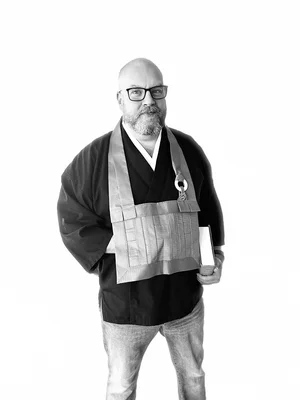
Dhammapada Reflections | Part Fifteen | Chapters Twenty-Five & Twenty-Six
CHAPTER 25
THE MONK
25:1 Good is restraint over the eye; good is restraint over the ear; good is restraint over the nose; good is restraint over the tongue.
25:2 Good is restraint in the body; good is restraint in speech; good is restraint in thought. Restraint everywhere is good. The monk restrained in every way is freed from all suffering.
25:3 He who has control over his hands, feet and tongue; who is fully controlled, delights in inward development, is absorbed in meditation, keeps to himself and is contented – him do people call a monk.
25:4 That monk who has control over his tongue, is moderate in speech, unassuming and who explains the Teaching in both letter and spirit – whatever he says is pleasing.
25:5 The monk who abides in the Dhamma, delights in the Dhamma, meditates on the Dhamma, and bears the Dhamma well in mind – he does not fall away from the sublime Dhamma.
25:6 One should not despise what one has received, nor envy the gains of others. The monk who envies the gains of others does not attain to meditative absorption.
25:7 A monk who does not despise what he has received, even though it be little, who is pure in livelihood and unremitting in effort – him even the gods praise.
25:8 He who has no attachment whatsoever for the mind and body, who does not grieve for what he has not – he is truly called a monk.
25:9 The monk who abides in universal love and is deeply devoted to the Teaching of the Buddha attains the peace of Nibbana, the bliss of the cessation of all conditioned things.
25:10 Empty this boat, O monk! Emptied, it will sail lightly. Rid of lust and hatred, you shall reach Nibbana.
25:11 Cut off the five, abandon the five, and cultivate the five. The monk who has overcome the five bonds is called one who has crossed the flood.
25:12 Meditate, O monk! Do not be heedless. Let not your mind whirl on sensual pleasures. Heedless, do not swallow a red-hot iron ball, lest you cry when burning, “O this is painful!”
25:13 There is no meditative concentration for him who lacks insight, and no insight for him who lacks meditative concentration. He in whom are found both meditative concentration and insight, indeed, is close to Nibbana.
25:14 The monk who has retired to a solitary abode and calmed his mind, who comprehends the Dhamma with insight, in him there arises a delight that transcends all human delights.
25:15 Whenever he sees with insight the rise and fall of the aggregates, he is full of joy and happiness. To the discerning one this reflects the Deathless.
25:16 Control of the senses, contentment, restraint according to the code of monastic discipline – these form the basis of holy life here for the wise monk.
25:17 Let him associate with friends who are noble, energetic, and pure in life; let him be cordial and refined in conduct. Thus, full of joy, he will make an end of suffering.
25:18 Just as the jasmine creeper sheds its withered flowers, even so, O monks, should you totally shed lust and hatred!
25:19 The monk who is calm in body, calm in speech, calm in thought, well-composed and who has spewn out worldliness – he, truly, is called serene.
25:20 By oneself one must censure oneself and scrutinize oneself. The self-guarded and mindful monk will always live in happiness.
25:21 One is one’s own protector, one is one’s own refuge. Therefore, one should control oneself, even as a trader controls a noble steed.
25:22 Full of joy, full of faith in the Teaching of the Buddha, the monk attains the Peaceful State, the bliss of cessation of conditioned things.
25:23 That monk who while young devotes himself to the Teaching of the Buddha illumines this world like the moon freed from clouds.
CHAPTER 26
THE HOLY MAN
26:1 Exert yourself, O holy man! Cut off the stream of craving, and discard sense desires. Knowing the destruction of all conditioned things, become, O holy man, the knower of the Uncreate, Nibbana!
26:2 When a holy man has reached the summit of two paths, meditative concentration and insight, he knows the truth and all his fetters fall away.
26:3 He for whom there is neither this shore nor the other shore, nor yet both, he who is free of cares and is unfettered – him do I call a holy man.
26:4 He who is meditative, stainless and settled, whose work is done and who is free from cankers, having reached the highest goal – him do I call a holy man.
26:5 The sun shines by day, the moon shines by night. The warrior shines in armor, the holy man shines in meditation. But the Buddha shines resplendent all day and all night.
26:6 Because he has discarded evil, he is called a holy man. Because he is serene in conduct, he is called a recluse. And because he has renounced his impurities, he is called a renunciate.
26:7 One should not strike a holy man, nor should a holy man, when struck, give way to anger. Shame on him who strikes a holy man, and more shame on him who gives way to anger.
26:8 Nothing is better for a holy man than when he holds his mind back from what is endearing. To the extent the intent to harm wears away, to that extent does suffering subside.
26:9 He who does no evil in deed, word and thought, who is restrained in these three ways – him do I call a holy man.
26:10 Just as a brahmin priest reveres his sacrificial fire, even so should one devoutly revere the person from whom one has learned the Dhamma taught by the Buddha.
26:11 Not by matted hair, nor by lineage, nor by birth does one become a holy man. But he in whom truth and righteousness exist – he is pure, he is a holy man.
26:12 What is the use of your matted hair, O witless man? What of your garment of antelope’s hide? Within you is the tangle of passion; only outwardly do you cleanse yourself.
26:13 The person who wears a robe made of rags, who is lean, with veins showing all over the body, and who meditates alone in the forest – him do I call a holy man.
26:14 I do not call him a holy man because of his lineage or high-born mother. If he is full of impeding attachments, he is just a supercilious man. But who is free from impediments and clinging – him do I call a holy man.
26:15 He who, having cut off all fetters, trembles no more, who has overcome all attachments and is emancipated – him do I call a holy man.
26:16 He who has cut off the thong of hatred, the band of craving, and the rope of false views, together with the appurtenances of latent evil tendencies; he who has removed the crossbar of ignorance and is enlightened – him do I call a holy man.
26:17 He who without resentment endures abuse, beating and punishment; whose power, real might, is patience – him do I call a holy man.
26:18 He who is free from anger, is devout, virtuous, without craving, self-subdued and bears his final body – him do I call a holy man.
26:19 Like water on a lotus leaf, or a mustard seed on the point of a needle, he who does not cling to sensual pleasures – him do I call a holy man.
26:20 He who in this very life realizes for himself the end of suffering, who has laid aside the burden and become emancipated – him do I call a holy man.
26:21 He who has profound knowledge, who is wise, skilled in discerning the right or wrong path, and has reached the highest goal – him do I call a holy man.
26:22 He who holds aloof from householders and ascetics alike, and wanders about with no fixed abode and but few wants – him do I call a holy man.
26:23 He who has renounced violence towards all living beings, weak or strong, who neither kills nor causes others to kill – him do I call a holy man.
26:24 He who is friendly amidst the hostile, peaceful amidst the violent, and unattached amidst the attached – him do I call a holy man.
26:25 He whose lust and hatred, pride and hypocrisy have fallen off like a mustard seed from the point of a needle – him do I call a holy man.
26:26 He who utters gentle, instructive and truthful words, who imprecates none – him do I call a holy man.
26:27 He who in this world takes nothing that is not given to him, be it long or short, small or big, good or bad – him do I call a holy man.
26:28 He who wants nothing of either this world or the next, who is desire-free and emancipated – him do I call a holy man.
26:29 He who has no attachment, who through perfect knowledge is free from doubts and has plunged into the Deathless – him do I call a holy man.
26:30 He who in this world has transcended the ties of both merit and demerit, who is sorrowless, stainless and pure – him do I call a holy man.
26:31 He who, like the moon, is spotless and pure, serene and clear, who has destroyed the delight in existence – him do I call a holy man.
26:32 He who, having traversed this miry, perilous and delusive round of existence, has crossed over and reached the other shore; who is meditative, calm, free from doubt, and, clinging to nothing, has attained to Nibbana – him do I call a holy man.
26:33 He who, having abandoned sensual pleasures, has renounced the household life and become a homeless one; has destroyed both sensual desire and continued existence – him do I call a holy man.
26:34 He who, having abandoned craving, has renounced the household life and become a homeless one, has destroyed both craving and continued existence – him do I call a holy man.
26:35 He who, casting off human bonds and transcending heavenly ties, is wholly delivered of all bondages – him do I call a holy man.
26:36 He who, having cast off likes and dislikes, has become tranquil, is rid of the substrata of existence and like a hero has conquered all the worlds – him do I call a holy man.
26:37 He who in every way knows the death and rebirth of all beings, and is totally detached, blessed and enlightened – him do I call a holy man.
26:38 He whose track no gods, no angels, no humans trace, the Arahat who has destroyed all cankers – him do I call a holy man.
26:39 He who clings to nothing of the past, present and future, who has no attachment and holds on to nothing – him do I call a holy man.
26:40 He, the Noble, the Excellent, the Heroic, the Great Sage, the Conqueror, the Passionless, the Pure, the Enlightened one – him do I call a holy man.
26:41 He who knows his former births, who sees heaven and hell, who has reached the end of births and attained to the perfection of insight, the sage who has reached the summit of spiritual excellence – him do I call a holy man.
SENSEI MICHAEL COMMENTARY
CHAPTERS XXV-XXVI | THE MONK & THE HOLY MAN
Chapter twenty-five begins with instruction on restraint. The eye, ear, nose, tongue, body, speech, and thought are all brought before our conscious awareness, and it would be easy to hear this as some demand to clamp down on thought-experience. Restraint, however, is not suppression– restraint is not adding. Something appears before us and then, almost immediately, the karmic pendulum begins to swing. We long for what seems pleasant, recoil from what seems threatening, and begin constructing a world around those dizzying movements. Restraint is the capacity to meet what has appeared before we add the next layer. We do not have to deny what is here, and we do not have to immediately become what our longing and aversion would make of it.
This is why restraint walks hand-in-hand with meditation. Ordinarily, our attention is dominated by the discursive mind and its karmic narrative. Something happens and attention is immediately captured by what we think about what happened, what it means, why it should or should not have happened, and what ought to happen next. Before long, the living event has almost disappeared beneath the story. Mentation-practice leaves attention inside that story and then tries to solve the story from within it. In contrast, Meditation-practice places attention with intention. We shift our gaze wide enough to include what is actually present before grasping closes around it.
I often use the image of carrying a board on one shoulder. If the board is sitting on our right shoulder, our vision is blocked in one direction. We see the discursive narrative clearly enough because it is right in front of us, but the intrinsic wholeness of the living world has disappeared behind the board. So practice begins by moving the board to the other shoulder. Suddenly we can see what had been obscured. The bird is singing, the floor is beneath our feet, breath is moving, grief is here, sunlight is coming through the window, and the world is infinitely larger than the narrative we had mistaken for the whole of it.
But we still have a board on our shoulder.
If we stop there, we have simply exchanged one partial view for another. We can become attached to silence, immediacy, spaciousness, or some idea of pure awareness just as easily as we became attached to the discursive story. The karmic narrative was never something that needed to be thrown outside the gate. To shift our gaze is to include everything, including the story we are telling, the judgment that has arisen, the memory that is shaping what we see, and the desire to make the present conform to something else. Full practice-integration comes when we finally put the board down and allow both the intrinsic wholeness and our conditioned narrative to appear within the same field. Then we can engage the whole of it with wisdom.
Concentration and insight cannot be separated. Attention without wisdom can become idle navel-gazing, and insight without the stability of attention can produce another idea about reality. Meditation gives us enough intimacy with what is present to actually see it; insight allows us to see that what is present is conditioned, moving, and empty of the permanence we keep trying to assign to it. The monk sees the rise and fall of the aggregates and experiences joy, not because all movement has stopped, but because movement no longer has to threaten a self that needs everything to remain fixed.
The boat appears in the middle of this chapter: “Empty this boat, O monk! Emptied, it will sail lightly.” Note that the boat is not destroyed–we still need the boat! We still have a body, a history, responsibilities, preferences, wounds, relationships, and a karmic narrative through which we make our way in the world. Practice is not burning the boat because we have discovered that it is conditioned. We empty what has accumulated unnecessarily so that what is already here can move freely. The lighter the boat becomes, the less we need every experience to reinforce who we think we are.
Contentment arises here naturally. Contentment is not resignation to circumstances that cause suffering. It is freedom from the demand that some imagined future has to arrive before this life can be inhabited. The monk does not despise what has been received or envy what belongs to another. What is here becomes workable because we are no longer spending the whole of our energy comparing it with what is not here. Once again, this is not passivity: it is what makes creative activity possible. If our attention is consumed by longing for another set of causes and conditions, we cannot work skillfully with the ones that have actually arrived.
The jasmine creeper then sheds its withered flowers. There is no violence in the image. The plant does not attack yesterday’s blossoms or condemn them for dying. They have completed their activity and fall away. This is a much better image for practice than the spiritual fantasy of cutting unacceptable parts from ourselves. Hatred, craving, and the stories through which they have been maintained can fall away when we stop feeding them. We do not have to keep dead flowers attached to the vine simply because they once belonged there.
The chapter closes with close self-awareness and the moon freed from clouds. The moon was not manufactured by clearing the sky, nor had it become defective when clouds passed across it. Practice makes visible what was obscured, and this requires that we become capable of looking carefully at our own activity without turning self-awareness into the weapon of self-scrutiny. We examine body, speech, and mind because we are responsible for what they place into the world, not because we are trying to establish a pure spiritual self by attacking an impure one. The cloud passes, and the moon is still the moon.
Chapter twenty-six begins calling someone a holy man, and then spends almost the entire chapter destroying every easy way we might decide who that person is. Not matted hair. Not birth. Not lineage. Not clothing. Not the appearance of austerity. The spiritual self is extraordinarily talented at taking whatever the tradition values and attempting to build a house out of it. If lineage is valuable, then I will establish myself through lineage. If simplicity is valuable, I will become the simplest person in the room. If robes are meaningful, I will let the robe tell me who I am. We have seen this movement throughout the entire text. The house-builder does not disappear because the house now looks Buddhist.
This does not make lineage unimportant. The chapter says plainly that we should revere the person from whom we have learned the Dharma, and I think we should take that seriously. Dharma is transmitted through living relationship. We need teachers who point, challenge, correct, and sometimes refuse to allow us to continue inhabiting a world we have mistaken for reality. Lineage matters because these relationships carry practice across generations and place us within obligations larger than our individual preferences. But pedigree cannot awaken us. A title can name a relationship and its responsibilities; it cannot prove realization. A robe can carry centuries of meaning; it cannot practice. If we use any of these things as evidence that we have arrived, we have simply found one more place for the karmic self to live.
We are therefore returned over and over to activity. The holy man is known by how he engages what appears. He answers violence with peace. He answers aggressive lies with gentle truth. He remains fiercely friendly amidst hostility and actively peaceful amidst violence. He takes nothing that is not given and does not organize his life around gaining something here or in some imagined world to come. Holiness is not a substance someone possesses. It becomes visible as the active quality of participation.
We have spent fifteen installments examining the way the karmic self continually tries to turn activity into identity. We do something good and become a good person. We receive a teaching and become someone who knows. We take vows and become someone who has taken vows. Soon the activity that might have liberated us becomes another wall in the house. The final chapter will not permit even holiness to become property.
This is also why the text returns to patience under abuse. Patience is not weakness, and it is not permission for suffering to continue unchallenged. Real strength is the capacity to receive what has arrived without immediately adding the next turn of the karmic wheel. Someone strikes, and anger appears. We see it. We bow to it. We understand what it is telling us, and then we decide what happens next. If retaliation automatically follows injury, the prior action has dictated our activity for us. Restraint interrupts that inheritance. We can still say no. We can still stop harm. We can still act decisively. But we do not have to hand the reins to the very conditions that produced the suffering in the first place.
The text describes the holy man as having no fixed abode, and by now this should sound familiar. No fixed abode does not mean homelessness in the simple physical sense. It means there is no karmic construction we are required to defend as the place where the self must permanently reside. We can use identities, roles, stories, forms, and institutions without having to live inside them. The created self does not vanish; we stop mistaking it for our true home. This is what allows us to move through circumstances without demanding that every circumstance confirm who we are.
The chapter goes even farther and places the holy man beyond merit and demerit. Again, this does not abolish morality. It releases morality from the karmic ledger. We do not ameliorate suffering in order to become the sort of person who deserves a reward, and we do not avoid harm in order to preserve an identity as good. We act because suffering is here. We create harmony because harmony is possible. We allow compassion to arise because nothing is outside. Once the need to defend the meritorious self loosens, we no longer need a demeritorious other against whom that self can be defined.
Then the moon appears again, serene and clear, and the text describes the one who clings to nothing in past, present, or future. We have already seen that letting go of time does not mean refusing memory or abandoning planning. It means no longer turning any of them into an abode. The past can teach without becoming a prison. The future can be cultivated without becoming a demand. The present can be fully inhabited without becoming another spiritual possession. Nothing needs to be pushed outside, and nothing needs to be grasped tightly enough to survive forever.
Finally, the Dhammapada gives us the trackless person, someone whose path cannot be traced even by gods, angels, or human beings. This is a fitting place for the text to end because a track is what remains when activity hardens into something fixed. From the beginning of this series we have watched the karmic self create worlds out of its own movements and then become bound by them. The fool inhabited certainty. The renouncer could become attached to renunciation. Love became ownership. Anger became an attempt to force the world into conformity. Practice itself could become Mentation-practice. Even holiness could become one last identity to defend. By the end, there is nowhere left for the karmic self to hide.
When I see a student wake up, I do not see someone beginning to understand Buddhism. I see something much more embodied. I see them beginning to engage what is present. The Dharma works them. The explanations may still be there, the karmic narrative is still weaving its yarns. The board may even appear from time to time–but those things no longer cause them to retreat into idle rumination. The student begins to work with what has actually arrived to actively transform the suffering they encounter, and they place their shoulder to the Dharma-wheel.
There is no useful distinction between the teaching we have received and the life through which it is expressed. The student is no longer merely carrying Dharma, repeating Dharma, or trying to become a person who possesses Dharma. They become working Dharma: body, speech, and mind responding to the whole field with wisdom, intimacy, and compassion.
The Dhammapada began by telling us that mind precedes the world we experience. We have spent the entire journey watching that mind divide, grasp, fear, judge, construct, defend, and finally learn to see its own activity. Nothing we created had to be amputated, and nothing outside had to be conquered. Again and again the work was to see what was here, recognize what we added, and engage the whole thing skillfully.
At the end, there is a new world waiting for us:
This very one, finally lived!