
UJI | 有時
(or Being-Time, The Time-Being, 有時) by Eihei Dōgen Zenji
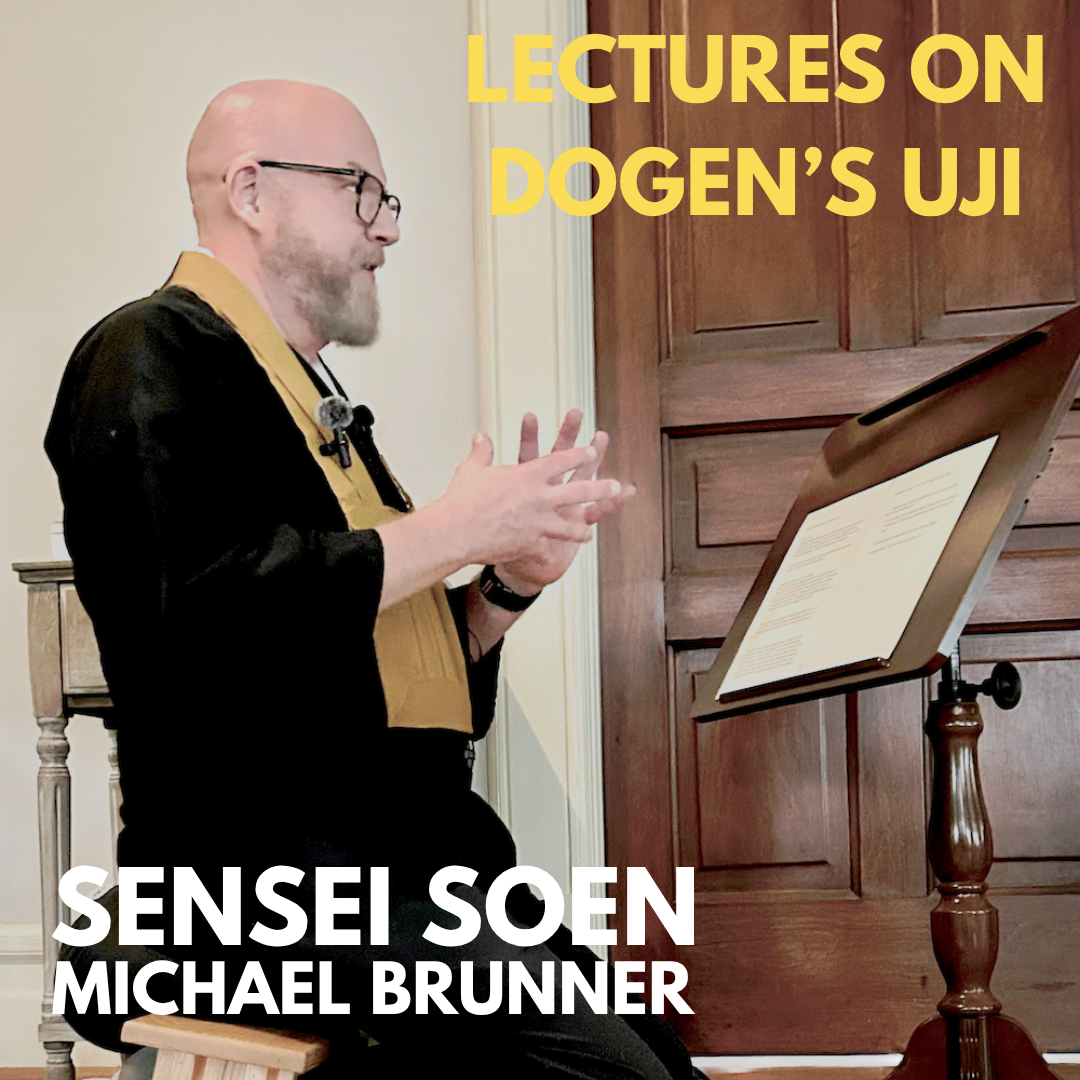
Commentary by Sensei Michael Brunner
“Uji,” most often translated as “Being-Time,” is Dōgen’s profound exploration of the inseparability of existence and time. Mountains are time. Oceans are time. Buddhas, ordinary people, practice, awakening, mistakes, and even the moments we imagine have already passed are all complete expressions of uji. Rather than treating time as something that carries us from past to future, Dōgen invites us to encounter the boundless activity of being-time directly. Each moment completely manifests the whole of existence, calling us beyond our conditioned ideas of self and time into the intimacy of the present-infinite. Through Uji, we discover that we do not merely exist within time. We are time, and time is our very being.
There is a rich and fascinating body of scholarship devoted to Dōgen, his language, historical setting, philosophical implications, and the many ways Uji may be translated and interpreted. That scholarship can greatly deepen our appreciation of the text. The primary intention of this series, however, is different. Uji was not written merely to give us something extraordinary to think about. It points toward something to be encountered, practiced, and realized within the immediacy of our own lives.
These commentaries therefore approach Uji principally as a practice text. Our concern is not simply what Dōgen meant, but what his words reveal about the way we construct ourselves and time, how that construction shapes our suffering, and what becomes possible when being-time is encountered directly. The scholarship is important. The destination of this series is practice-integration: allowing Dōgen’s teaching to leave the page and become intimate with the way we sit, act, suffer, awaken, and live.
The Text:
A former Buddha once said in verse:
Standing atop a soaring mountain peak is for the time being,
And plunging down to the floor of the Ocean’s abyss is for the time being;
Being triple-headed and eight-armed is for the time being,
And being a figure of a Buddha standing sixteen feet tall or sitting eight feet high is for the time being;
Being a monk’s traveling staff or his ceremonial hossu is for the time being,
And being a pillar supporting the temple or a stone lantern before the Meditation Hall is for the time being;
Being a next-door neighbor or a man in the street is for the time being,
And being the whole of the great earth and boundless space is for the time being.
The phrase “for the time being” implies that time in its totality is what existence is, and that existence in all its occurrences is what time is. Thus, “being a golden body sixteen feet tall” refers to a time. And because it is a time, its time will have a wondrous luminosity—a point that we will be studying and learning about during the present twenty-four hours. “Being one with three heads and eight arms” also refers to a time. And because it is a time, it will be one and the same as the present twenty-four hours.
Granted that we may not yet have measured the length of these twenty-four hours as to whether they are ever so long or as short as a sigh, still we speak of them as “the twenty-four hours of our day.” The traces of this time having come and gone are clear, so people do not doubt that these hours have occurred. But, though people have no doubt about time having occurred, the past may be something that they have not known through their direct experience. And, just because sentient beings are always having their doubts about anything and everything that they have not directly experienced, this does not mean that what they may have previously doubted is the same as what they may now have doubts about, for doubts themselves are merely “just for the moment” kinds of time, and nothing more.
❀
Since we human beings are continually arranging the bits and pieces of what we experience in order to fashion “a whole universe,” we must take care to look upon this welter of living beings and physical objects as “sometime” things. Things do not go about hindering each other’s existence any more than moments of time get in each other’s way.
As a consequence, the intention to train arises at the same time in different beings, and this same intention may also arise at different times. And the same applies to training and practice, as well as to realizing the Way. In a similar manner, we are continually arranging bits and pieces of what we experience in order to fashion them into what we call “a self,” which we treat as “myself”: this is the same as the principle of “we ourselves are just for a time.”
Because of this very principle of the way things are, the earth in its entirety has myriad forms and hundreds of things sprouting up, each sprout and each form being a whole earth—a point which you should incorporate into your study of the Way, for the recognition of the coming and going of things in this manner is a first step in training and practice.
When you reach such a fertile field of seeing the way things really are, then the earth in its entirety will be “one whole sprouting, one whole form”; it will be comprised of forms that you recognize and forms that you do not, sproutings that you recognize and sproutings that you do not. It is the same as the times we refer to in “from time to time,” which contain all forms of existence and all worlds. So take a moment to look around and consider whether there is any form of being, that is, any “world,” that does or does not find expression at this very moment of time.
❀
When ordinary, everyday people who do not take the Buddha’s Teachings as their model hear the phrase “just for the time being” in Yakusan’s poem, they customarily hold a view like the following:
There was once a time when Yakusan had become what he describes as “someone with three heads and eight arms” and some other time when he had become “someone eight or sixteen feet tall.” It is as though he were saying, “I have crossed the rivers and climbed over the mountains. Even though those mountains and rivers may have existed in the past, I have completely gone beyond them and have now made a place for myself atop a vermilion pedestal in the Jeweled Palace. I fancy that the mountains and rivers on the one hand and I on the other are now as far apart as heaven and earth.”
But such a view is not all there is to the principle of the case.
At the time when, proverbially, a mountain was being climbed and a river was being crossed, an I existed, and it was the time for that particular I. Since such an I existed, time could not abandon it. If time did not have the characteristic of “coming and going, being continually in flux,” then the time when this I was “climbing atop the mountain” would have remained forever, eternally comprised of that particular “time when.”
But, since time retains the characteristic of “coming and going, being continually in flux,” there is a flow of ever-present “nows,” each comprised of a time when an I exists. And this is what is meant by the phrase “just for the time being.”
Surely you don’t think that the earlier time when the word “I” referred to “climbing the mountain” or “crossing the river” gulped up the later time when the word “I” referred to “being on a vermilion pedestal within the Jeweled Palace,” or think that the former has vomited out the latter, do you?!?
Yakusan’s “being a triple-headed and eight-armed one” refers to a time that he would have called “yesterday”: his “being someone eight or sixteen feet tall” refers to a time that he would have called “today.”
Be that as it may, this principle of a past and a present simply corresponds to the two periods of time when an I had headed straight into the mountains and when an I was now looking out from a vermilion pedestal over the thousands of peaks and the thousands beyond them.
Nor have such periods passed away. The time of an I being “triple-headed and eight-armed for the time being” had passed, but even though it seemed to be of another time and place, it was indeed a part of the ever-present now. The time of an I being “eight or sixteen feet tall for the time being” has also passed, but even though it now seems to be something distant from us, it is indeed part of the ever-present now.
Thus, we speak of the pine as an analogy for time, as we also do of the bamboo.
❀
Do not look upon time as “something that just flies away”: do not teach yourself that “flying away” is simply how time functions. Were we to endow time with the property of “flying away,” there would undoubtedly be a gap left by the time that has flown. Should anyone have not yet heard teaching upon the principle expressed by the phrase “just for the time being,” he may still think of time only as “something which has gone away.”
❀
In short, everything whatsoever that exists in the whole universe is a series of instances of time. Since everything is for the time being, we too are for the time being.
❀
Time has the virtue of continuity: it continuously flows from the today that we are talking about to a tomorrow, from a today to a yesterday, from a yesterday to a today. It flows from a today to a today and from a tomorrow to a tomorrow.
Because continual, continuous flow is a function of time, past and present times do not pile atop each other nor do they form an accumulative line. Yet, even so, Seigen, too, represents a time, as does Ōbaku, and likewise Baso and Sekitō represent times.
Because we ourselves and others, as previously stated, are already “beings for a time,” our training and practice are times, as is also our awakening to Truth. Our “entering the mud or going into deep water” is likewise a time.
❀
The opinions of ordinary, everyday people today—as well as the source of those opinions—are based on what these people perceive. But this is not what ordinary people consider as being how things operate. For them, the way things operate is that they have “simply come about for a while.”
Because these people have convinced themselves that this time and this existence of theirs is not related to the way things really operate, they conclude that a golden body sixteen feet tall could not possibly be theirs. Trying to free oneself from this opinion that “the golden body of a Buddha cannot be mine” is also a bit of what the phrase “just for the time being” implies, and is something about which a trainee who has not yet reached spiritual certainty may say, “Oh, I see, I get it!”
❀
In the world today, we structure time by segments which we name, for instance, the Hours of the Horse or the Hours of the Sheep. Be that as it may, these segments are merely persistent fluctuations in the here and now of thoughts and things which arise and fall.
It is the same with the Hours of the Rat and the Hours of the Tiger, which are also “for a time.” And being an ordinary creature is also “for a time,” as is being a Buddha.
At such times as these, one will swear that being three-headed and eight-armed is the whole universe or that being a golden body sixteen feet tall is the whole universe. To universally penetrate the whole universe by means of the whole universe is called “complete realization.”
For us to give proof of a golden body sixteen feet tall by our attaining a golden body sixteen feet tall is to manifest our initial spiritual intention, our training and practice, our realizing of enlightenment, and our experiencing the freedom of nirvana—all of which comprises what existence is and what time is.
It is a complete realization that the whole of time is what the whole of existence is, and that there is nothing more than this. Anything else would be a time when there was a partial “complete realization,” which would be a full realization of a part of what “just for the time being” refers to.
❀
Even at a stage where it would seem that you have taken a false step, this condition will be a state of “being.” Further, should you leave the matter at this, your condition will still constitute a persistence of “a time being,” which will include both a before and an after to this “having taken a false step.”
Dealing with thoughts and things while they persist, like a fish darting about through the water, is indeed what “being just for the time being” is about. So, do not be upset over what is not, and do not be pressured by what is.
❀
Should you reckon one-sidedly that time only goes by, you will not comprehend time as something that has not yet arrived. Although we can say that comprehending something also constitutes a time, there is no connection that can link the one to the other.
No one with a human carcass who looks on time merely as “something that rolls on by me” can have any insight into the “time being” that persists just for a while, not to even mention the time when the barrier gate to realizing enlightenment is penetrated.
Even if we comprehend that It is what persists, who can express in words what This is that we have realized? Even if, over a long time, we have found ways to express It in words, there is no one yet who has not groped for ways to make It be manifest before your very eyes.
Were we to leave the matter of what “being for the time being” means to the way in which ordinary persons understand the phrase, it would be a “being for the time being” in which enlightenment and nirvana were, at best, merely passing characteristics.
The ever-present “time being” of which I am speaking cannot be snared like some bird by net or cage: it is what is manifesting before us.
It is a time when the heavenly lords and the other celestial inhabitants are now manifesting right and left of us, and are making every effort to do so, even at this very moment. In addition, it is a time when beings of water and land are making every effort to manifest.
Beings of all sorts, who are visible or invisible for the time being, are all making every effort to manifest, making every effort to flow on. If they did not make every effort to flow on, not even a single thought or thing would ever manifest: nothing would continue on.
You would do well to consider this point.
❀
The transiting of time and being is not to be thought of as wind blowing the rain from east to west. And it would be inaccurate to say that the whole world is unchanging, or that it is motionless: it is in transition.
The flow of time and being is like spring, for instance. The spring has an appearance of being abundant in its burgeoning, and we refer to this as its “passage.”
We should consider well that the spring “passes” without excluding anything within it. In other words, the passing of spring is, to be sure, a passing of what we humans call “spring.” “Passing” is not what spring is, but refers to the passage of the springtime; hence, it is a transition that is now being actualized during the time of spring.
You would do well to consider and reflect on this very carefully, for in speaking of “transiting,” some may think of it in reference to some place physically apart from themselves, which can be reached by turning eastward, say, or by traveling past myriad worlds over millions and millions of eons.
But such people are not concentrating simply on the study of the Buddha’s Way.
❀
Yakusan, who by imperial decree was named “The Great Teacher Whose Way Is Broad,” one time, at the direction of Great Master Sekitō Kisen, made a spiritual call on Meditation Master Baso.
Yakusan asked him, “The one standing before you has a fairly good idea of what all twelve divisions of the Scriptures as found among the followers of the Three Vehicles of Buddhism are about, so just why did the Ancestral Teacher Bodhidharma come east to China???”
Being queried in this manner, Meditation Master Baso responded, “There are times when we make That One’s eyebrows rise and His eyes twinkle, and there are times when we do not make His eyebrows rise and His eyes twinkle. There are times when we who make That One’s eyebrows rise and His eyes twinkle are right, and there are times when we who make His eyebrows rise and His eyes twinkle are not right.”
Upon hearing this, Yakusan had a great awakening and humbly said to Baso, “When I was with Sekitō, I was like a mosquito climbing over an iron ox, trying to find a place to bite.”
Baso’s way of putting things is unlike that of any other. “Brows and eyeballs” would refer to the mountains and the oceans, because the mountains and the oceans are His brows and eyeballs. Baso’s “making Him raise His eyebrows” would be comparable to Yakusan’s focusing on the Mountain, and Baso’s “making His eyes twinkle” would be comparable to Yakusan’s fixing his eyes on the Ocean.
“Being right” means attempting to learn from “That One”: “That One” is That which is being invited to teach. “Not being right” does not mean “not causing Him to act as He did,” nor does “not causing Him to act as He did” mean “not being right.”
❀
Mountains are of time: oceans are of time. Were there no time, neither mountains nor oceans could be.
Do not think that time does not exist for the mountains and oceans of the present moment. Were time to cease to exist, so would mountains and oceans cease to exist: if time does not become extinct, then mountains and oceans too will not become extinct.
This is why the morning star arose, the Tathagata emerged, his clear Eye of Wise Discernment manifested, and the raising of the udumbara flower came about. These are times: were they not times, there could not be any “being with It” here and now.
❀
Meditation Master Kisei of Sekken County was a Dharma descendant of Rinzai, as well as Shuzan’s direct heir. One day, he addressed his monastic community in verse, saying:
There is a time when intending has arrived, but not expressing,
There is a time when expressing has arrived, but not intending,
There is a time when both intending and expressing have arrived,
And there is a time when both intending and expressing have not arrived.
Both “intending” and “expressing” are “for the time being”: both “having arrived” and “having not arrived” are “for the time being.”
Even though one may say that “the time of arriving is not yet fully here,” the time of “having not arrived” is here.
“Intending” is the donkey; “expressing” is the horse. The role of the horse is assigned to expressing; the role of the donkey is assigned to intending.
Just as “arriving” is not synonymous with “coming,” “having not arrived” does not mean “still not having arrived,” for this is what being “just for the time” is like.
Arriving is hindered by “arrival,” but is not hindered by not having arrived. Having not arrived is hindered by “not having arrived,” but is not hindered by arriving.
So, when it comes to intending, we look at our intention as just an intention; when it comes to expressing, we look at our expression as just an expression; when it comes to hindrances, we look at what is hindering us as just a hindrance. It is a matter of “obstructions” getting in the way of obstructions, all of which are “just for a time.”
Although you may say that “obstruction” is a word that we can apply to other situations, there is still nothing which I am calling “an obstruction” that impedes those situations.
It is ourselves encountering others; it is others encountering each other; it is ourselves encountering ourselves; it is one who is emerging encountering one who has emerged. If each of these did not have their specific time, being “with It” here and now would be impossible.
Furthermore, “intending” refers to the time when the spiritual question manifests before our very eyes; “expressing” refers to the time when one looks up and unbolts the barrier gate; “arriving” refers to the time when body and mind are dropped off; and “having not arrived” refers to the time when this “dropping off” is left behind, as you go always onward, always “becoming Buddha.”
This is the way that you should diligently apply yourself, the way that you should treat whatever arises as “just for a while.”
Although the venerable Masters up to the present time have spoken about the Matter in such a way, might there not be something more that needs to be said?
Well, I would add, “There are times when intending and expressing are halfway there, and there are times when intending and expressing are halfway not there.”
You would do well to investigate and clarify the Matter in such a way.
And again, “Making That One’s eyebrows rise and His eyes twinkle is half of what ‘just for the time being’ is about, and making That One’s eyebrows rise and His eyes twinkle may also be a counterfeit ‘just for the time being’, and making That One’s eyebrows rise and His eyes twinkle may also be a completely false ‘just for the time being’.”
In such a manner, coming to training, going on in training, training until you arrive, and training beyond arriving are, at all times, “just for the time being, just for a while.”
Written at Kōshōhōrin-ji Temple on the first day of winter in the first year of the Ninji era (October 17, 1240).
Copied by me during the summer training period in the first year of the Kangen era (1243).
Ejō
Commentary Copyright © 2026 Michael Brunner. All rights reserved.
The original commentary on this page may be quoted, shared, or reproduced for educational, religious, or noncommercial purposes with clear attribution to Michael Brunner and a citation or link to the original source at oneriverzen.org/uji-dogen. Substantial republication, adaptation, or commercial use requires prior written permission.
The translated passages from Eihei Dōgen’s Uji are presented separately from the commentary and remain subject to the rights associated with their respective translation and source edition.
Passages from Uji quoted throughout this commentary are from Shōbōgenzō: The Treasure House of the Eye of the True Teaching, translated by Rev. Hubert Nearman, O.B.C., © 2007 Shasta Abbey, used under the applicable Shasta Abbey terms for noncommercial distribution. The translation is reproduced here without alteration.
Commentary by Sensei Michael Brunner:
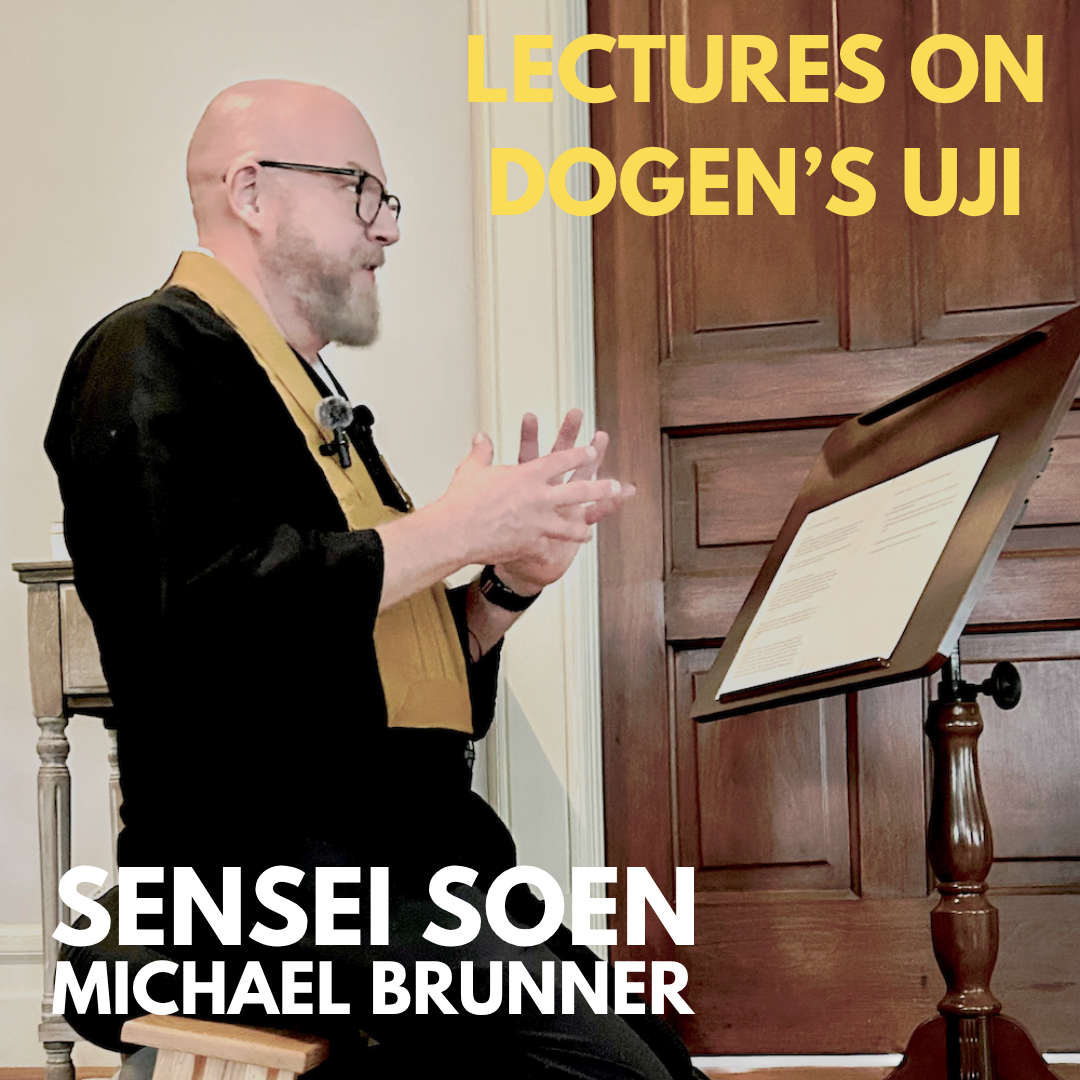
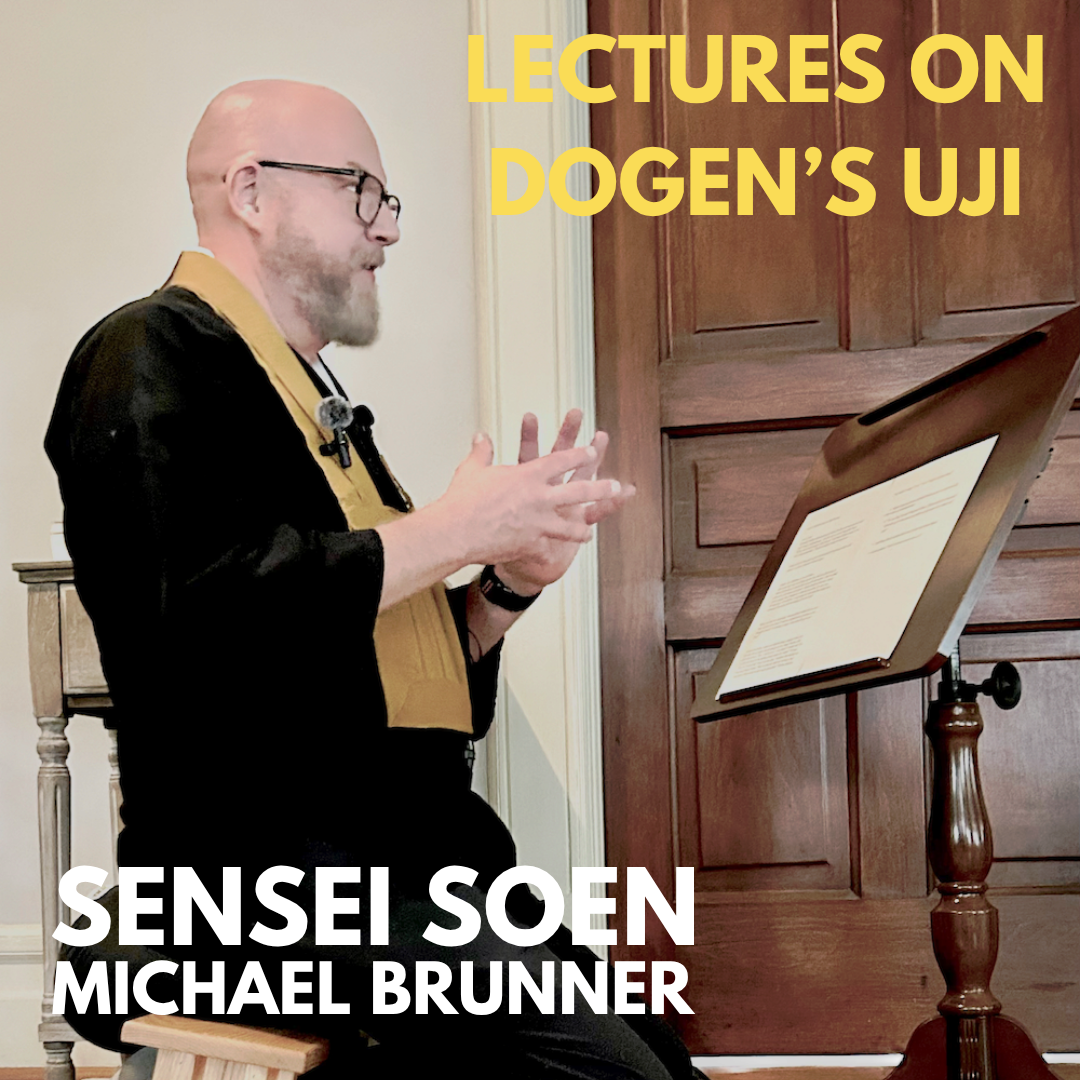
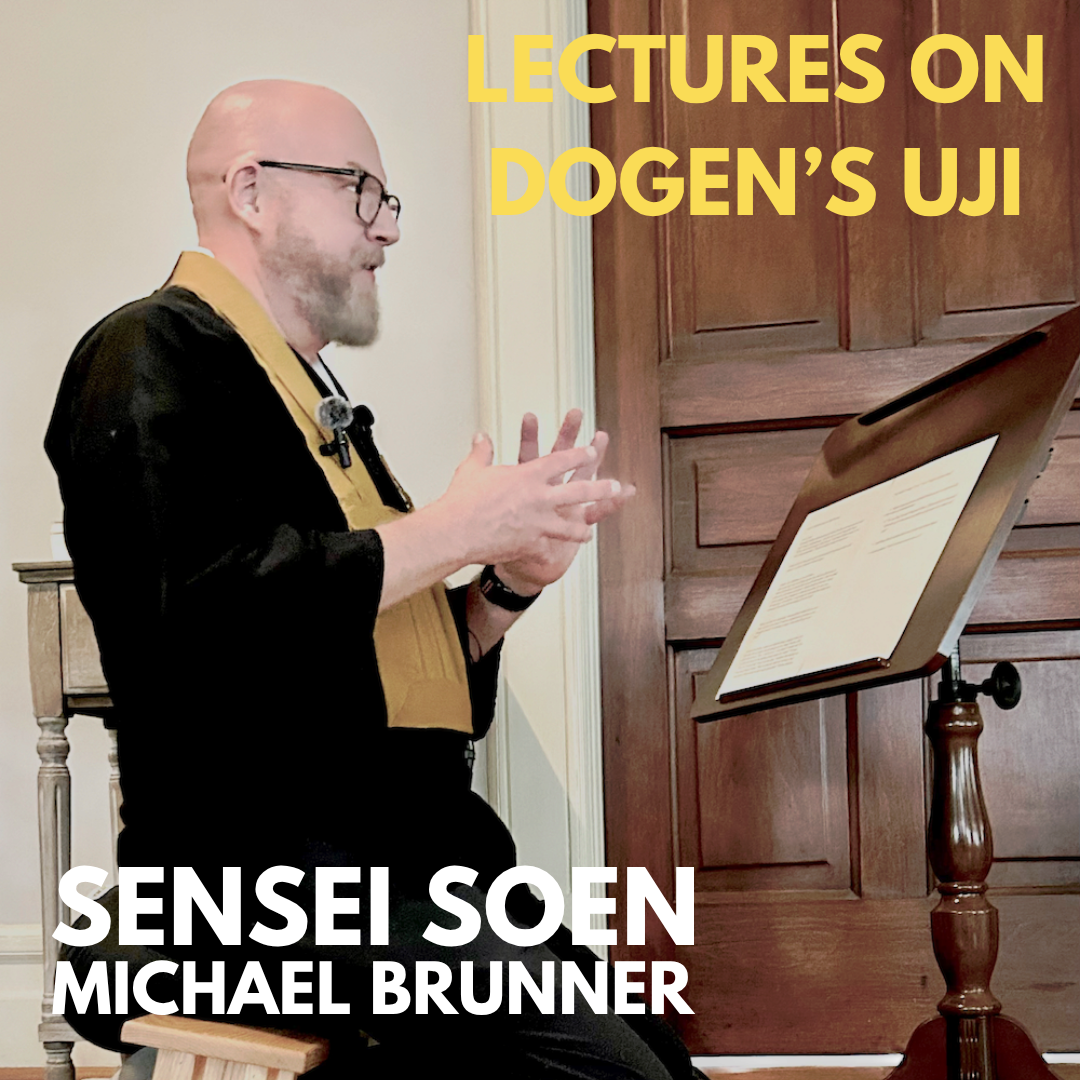
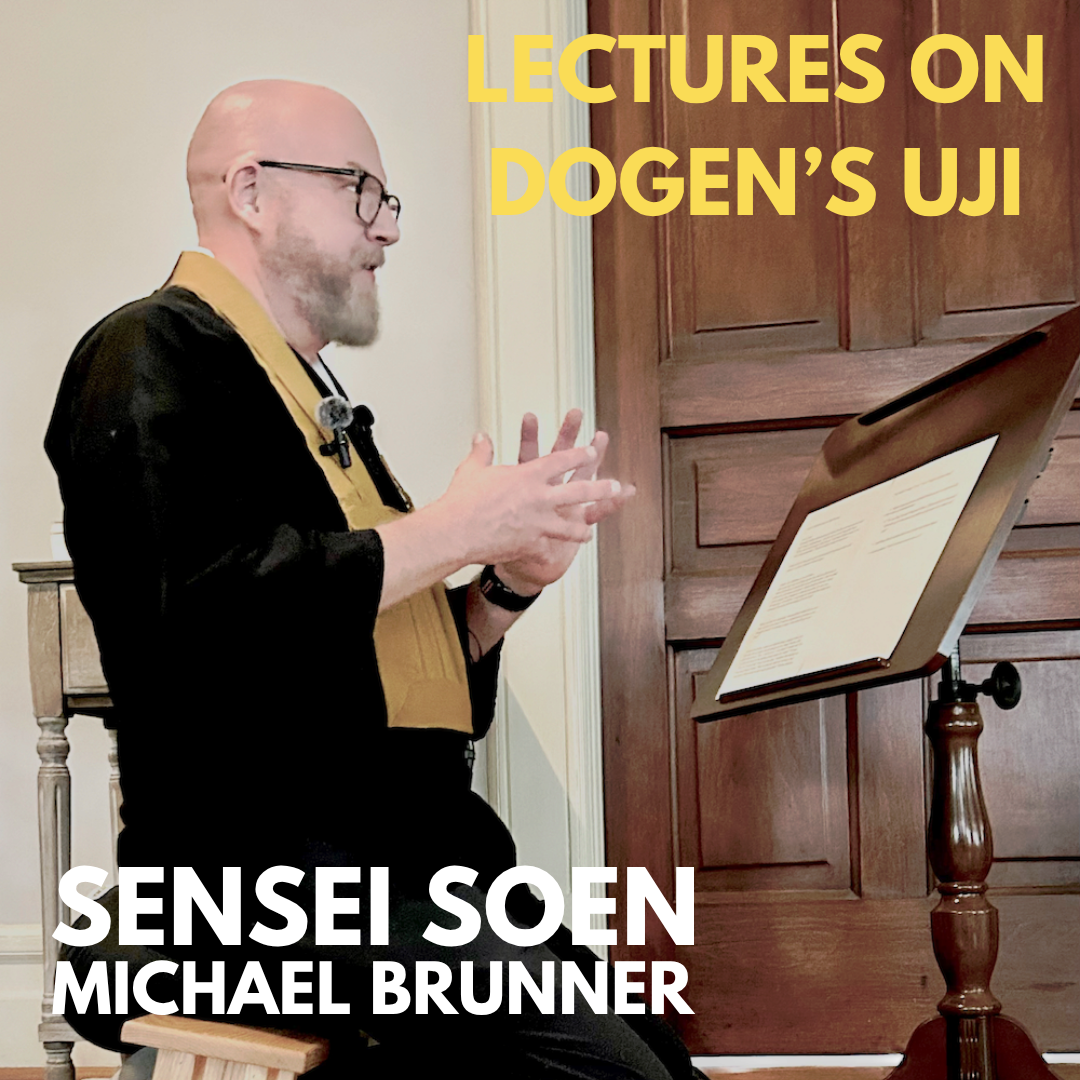
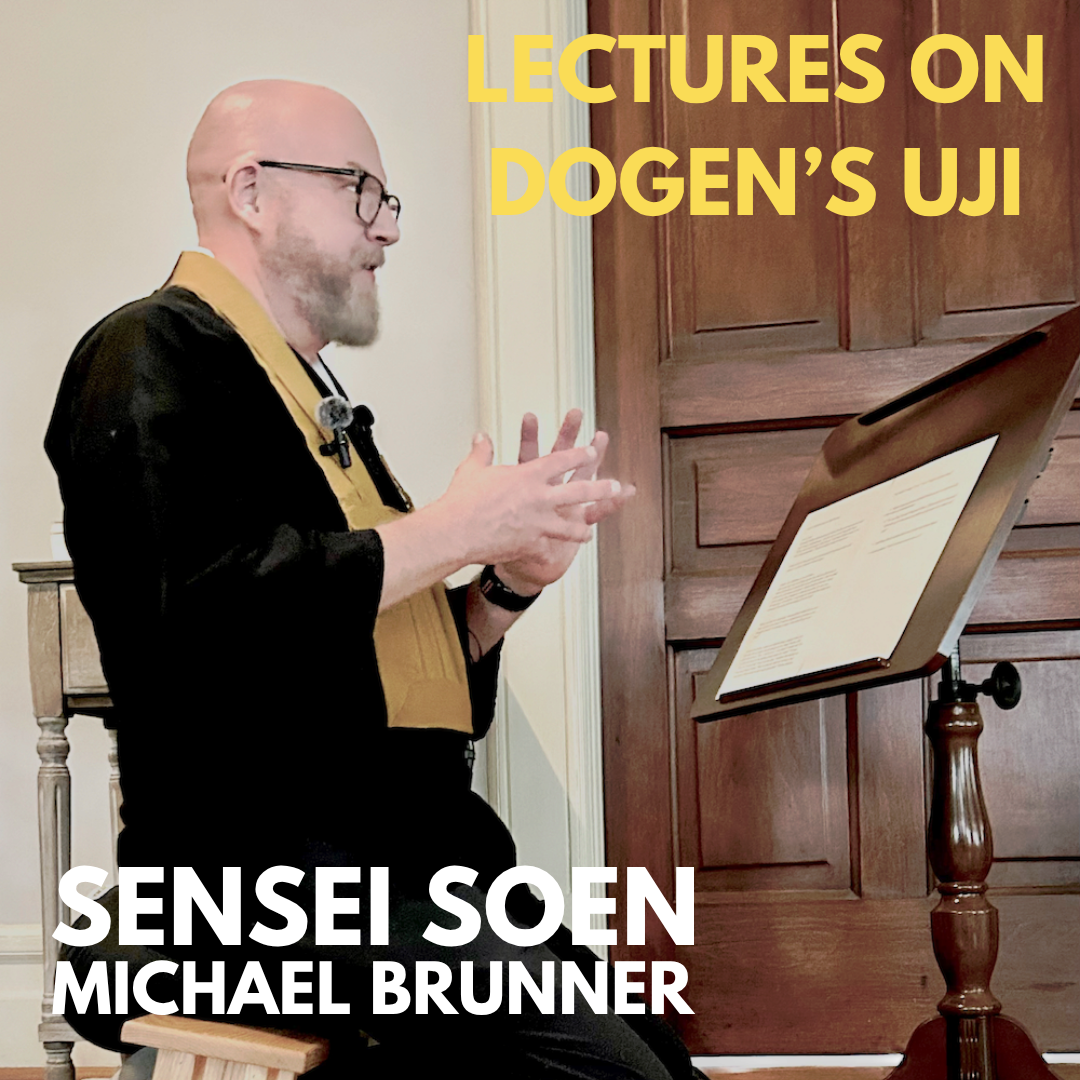
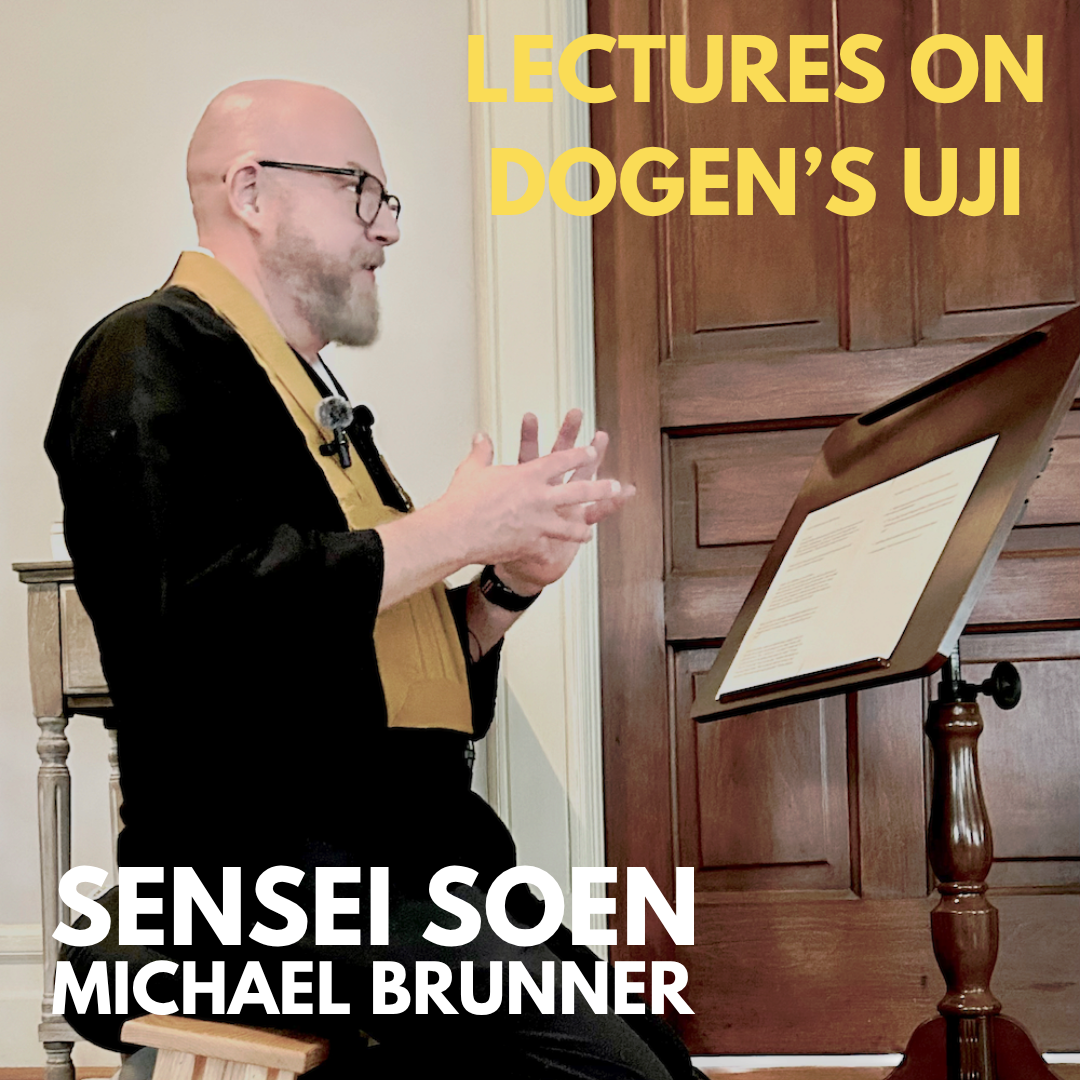
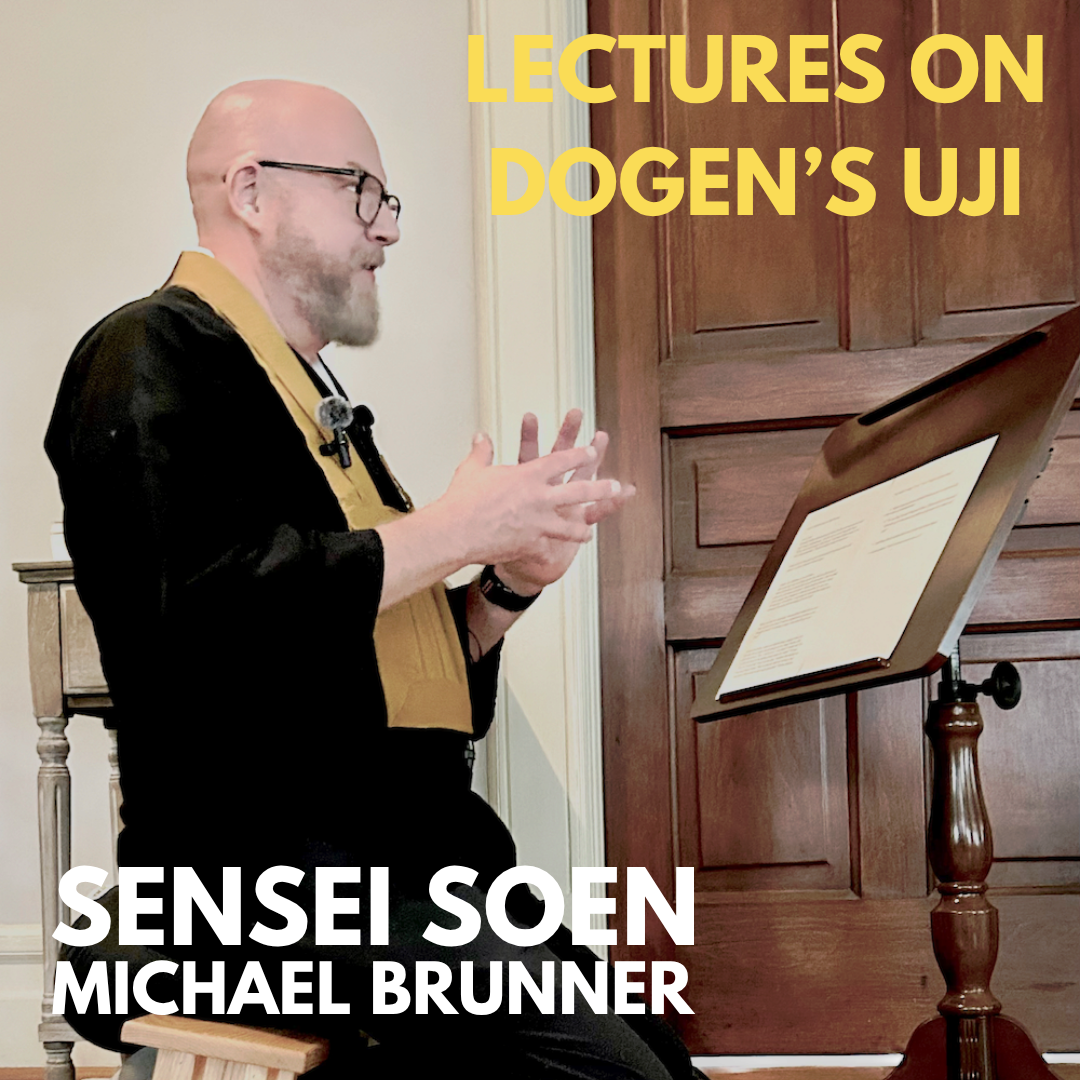
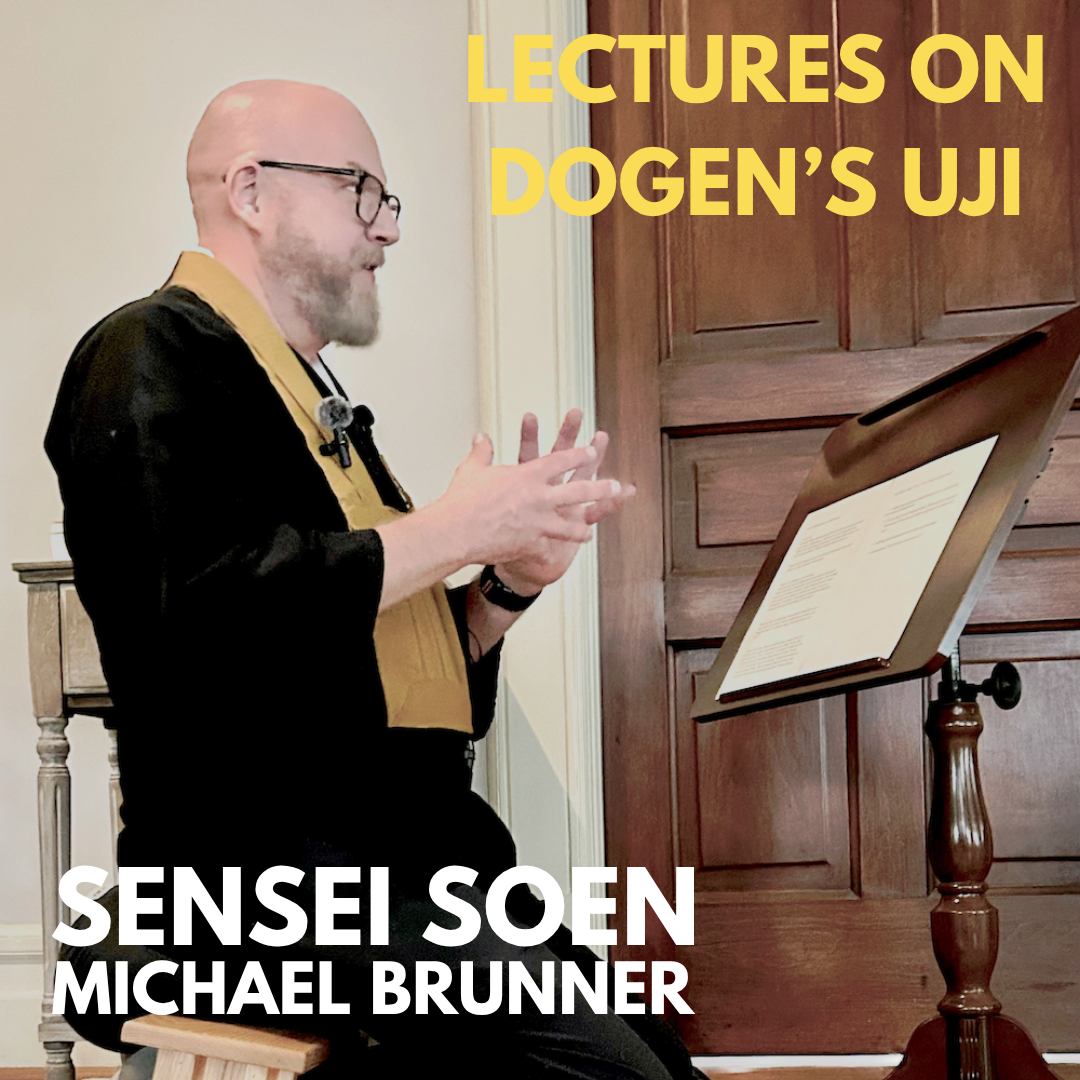
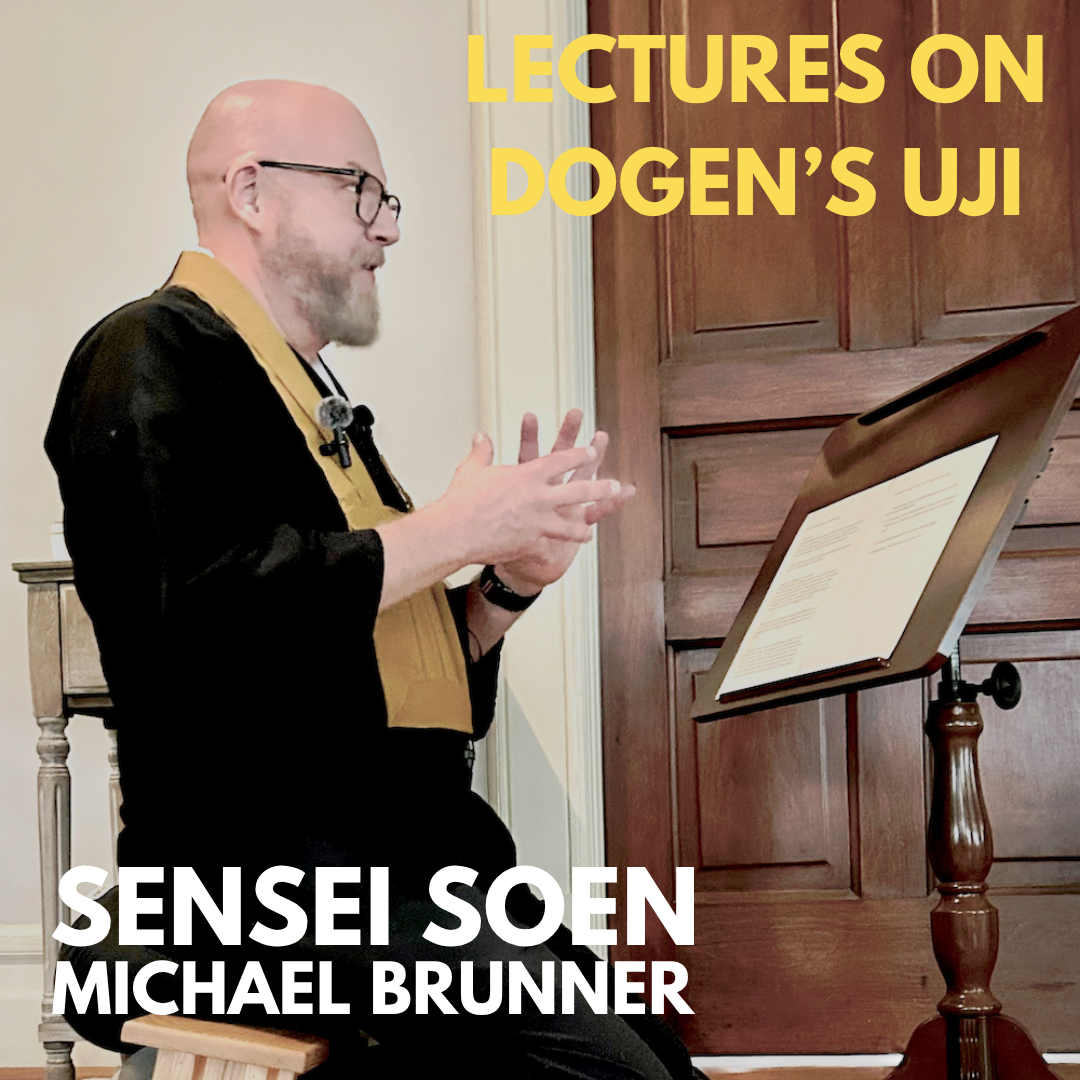
In this twenty-fifth and final installment of his commentary on Dōgen’s Uji, Sensei Michael Brunner explores practice as an ongoing expression of being-time. Coming to training, continuing practice, arriving, and going beyond arrival are each complete manifestations of uji, revealing that awakening is not a final destination but the living activity of practice itself.