CHAPTER 17
ANGER
17:1. One should give up anger, renounce pride, and overcome all fetters. Suffering never befalls him who clings not to mind and body and is detached.
17:2. He who checks rising anger as a charioteer checks a rolling chariot, him I call a true charioteer. Others only hold the reins.
17:3. Overcome the angry by non-anger; overcome the wicked by goodness; overcome the miser by generosity; overcome the liar by truth.
17:4. Speak the truth; yield not to anger; when asked, give even if you only have a little. By these three means can one reach the presence of the gods.
17:5. Those sages who are inoffensive and ever restrained in body go to the Deathless State, where, having gone, they grieve no more.
17:6. Those who are ever vigilant, who discipline themselves day and night, and are ever intent upon Nibbana—their defilements fade away.
17:7. O Atula! Indeed, this is an ancient practice, not one only of today: they blame those who remain silent, they blame those who speak much, they blame those who speak in moderation. There is none in the world who is not blamed.
17:8. There never was, there never will be, nor is there now, a person who is wholly blamed or wholly praised.
17:9. But the man whom the wise praise, after observing him day after day, is one of flawless character, wise, and endowed with knowledge and virtue.
17:10. Who can blame such a one, as worthy as a coin of refined gold? Even the gods praise him; by Brahma, too, is he praised.
17:11. Let a man guard himself against irritability in bodily action; let him be controlled in deed. Abandoning bodily misconduct, let him practice good conduct in deed.
17:12. Let a man guard himself against irritability in speech; let him be controlled in speech. Abandoning verbal misconduct, let him practice good conduct in speech.
17:13. Let a man guard himself against irritability in thought; let him be controlled in mind. Abandoning mental misconduct, let him practice good conduct in thought.
17:14. The wise are controlled in bodily action, controlled in speech, and controlled in thought. They are truly well-controlled.
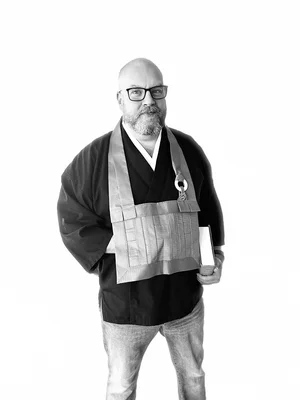
SENSEI MICHAEL COMMENTARY
CHAPTER XVII | ANGER
Anger is the way the karmic self does violence to the world in an attempt to force circumstances to conform to it. Something happens that does not fit the reality we have constructed, and anger arises to correct the discrepancy: This should not be happening. You should not be doing this. The world should not be this way. Anger is the force with which the small self tries to compel the living world back into agreement with what it believes reality ought to be.
Anger has momentum; this is why the Dhammapada gives us the image of the charioteer checking a rolling chariot. Once it begins moving, it gathers judgment, memory, justification, and imagined injury, and before long we are being dragged by something we believe we are controlling. The true charioteer is not someone who never experiences anger. The true charioteer is someone who recognizes when the chariot has begun to move and takes the reins before being carried away.
We should not hear this as a demand to suppress anger. Anger has a purpose. If a child is being assaulted, anger may arise immediately and appropriately because something must be set right. It can alert us that action is required. There is an enormous difference, however, between using that information to respond skillfully and allowing anger itself to determine the response. When anger arises, bow to it. Ask why it has appeared and what it believes it is protecting. Receive what it has to tell you, and then release its claim to the reins. Wisdom must decide what happens next.
The distinction becomes important because anger frequently presents itself as righteousness. The small self is extraordinarily talented at turning preference into principle. Someone disappoints us, challenges us, ignores us, misunderstands us, or simply refuses to behave according to the world we have constructed, and anger announces that justice has been violated. Sometimes it has. Sometimes we simply did not get our way. Practice requires enough honesty to know the difference.
This is what it means to overcome the angry by non-anger, the wicked by goodness, the miser by generosity, and the liar by truth. We do not correct one distortion by creating another. If someone brings anger into the field and we answer from anger, we have joined the same karmic construction. The content of our positions may be different, but the mechanism is identical. We have accepted separation, placed someone outside, and begun using violence to force reality toward the form we prefer. Non-anger does not mean passivity. It means refusing to let another person’s delusion determine the quality of our own participation.
The chapter then turns toward praise and blame, and here the teaching becomes especially subtle. The Dhammapada tells Atula that people blame the silent person, the person who speaks too much, and the person who speaks in moderation. There has never been anyone entirely praised or entirely blamed. If our actions are our true continuance, then praise and blame belong to the continuance of the constructed self. They are part of the story we keep extending about who we are in the minds of others.
We spend an extraordinary amount of energy managing that continuance. We want to be remembered correctly, understood correctly, judged fairly, praised appropriately, and protected from criticism we believe is undeserved. But the self being defended in all of this is another construction. The desire to control what others think of us becomes another attempt to force circumstances to conform. We may even become angry because someone has failed to participate properly in the version of ourselves we are trying to preserve.
This does not mean criticism is meaningless or that we should become indifferent to how our actions affect others. The text itself says that the wise observe someone day after day before praising their character. There is a difference between receiving correction and becoming imprisoned by reputation. A wise person can listen carefully to criticism because there is less self to defend. If something is true, we can work with it. If it is not true, we need not construct another world in order to destroy it.
The final verses bring us back to body, speech, and thought. Anger does not remain hidden somewhere inside us. What begins as a constructed judgment moves into speech, action, relationship, and eventually into the wider field of our creation. A thought rehearsed becomes a sentence. A sentence becomes an action. An action becomes a habit. A habit begins shaping the world we inhabit. This is why restraint cannot simply mean clenching our teeth and behaving correctly while the mind continues feeding the same hostility. We have to work at the source.
To guard the body is to notice when anger is beginning to become action. To guard speech is to recognize the moment we are about to use words as weapons. To guard thought is to notice the karmic construction being assembled before either of those things happens. This is not about creating an emotionally sterile mind in which irritation never appears. It is about becoming intimate enough with our thought-creations so that anger’s appearance doesn’t immediately elevate it to the architect of our actions.
The whole chapter therefore returns us to responsibility. Anger may arise because someone has harmed us. It may arise because something unjust is happening. It may arise because we are frightened, embarrassed, disappointed, or threatened. The arising itself is not the problem. The question is what we do when it appears. Do we hand it the reins and allow it to continue the karmic world that produced it, or do we bow, see clearly, and respond from the boundless field that anger was trying to divide?