
MEETING OUR TRUE SELF
Reflections on the Dhammapada
A contemporary commentary by Sensei Sōen Michael Brunner
A complete fifteen-part commentary on all twenty-six chapters of the Dhammapada, accompanied by a four-part lecture series.
The Dhammapada is one of the oldest and most widely read collections of Buddhist teachings, gathering 423 verses preserved in the Pāli Canon and traditionally attributed to the Buddha. Its language is direct, practical, and often deceptively simple. Again and again, it returns us to the workings of mind, the consequences of our actions, the roots of suffering, and the possibility of freedom.
Rather than presenting a systematic philosophy, the Dhammapada speaks directly to the conditions of ordinary human life: anger and desire, fear and attachment, friendship and conflict, discipline and wisdom. Its verses ask us not merely to understand the Dharma, but to examine how we are actually living and what our thoughts, words, and actions are creating.
In this commentary and lecture series, Sensei Michael Brunner explores the Dhammapada as a living text of practice, placing its teachings in their early Buddhist context while asking how they continue to illuminate the work of awakening here and now.
Dhammapada Lecture Series
Study alongside the written commentary through Sensei Michael Brunner's four-part lecture series:
Lecture One: Introduction to the Dhammapada and this Study
Lecture Two: Parts One through Five
Lecture Three: Parts Six through Ten
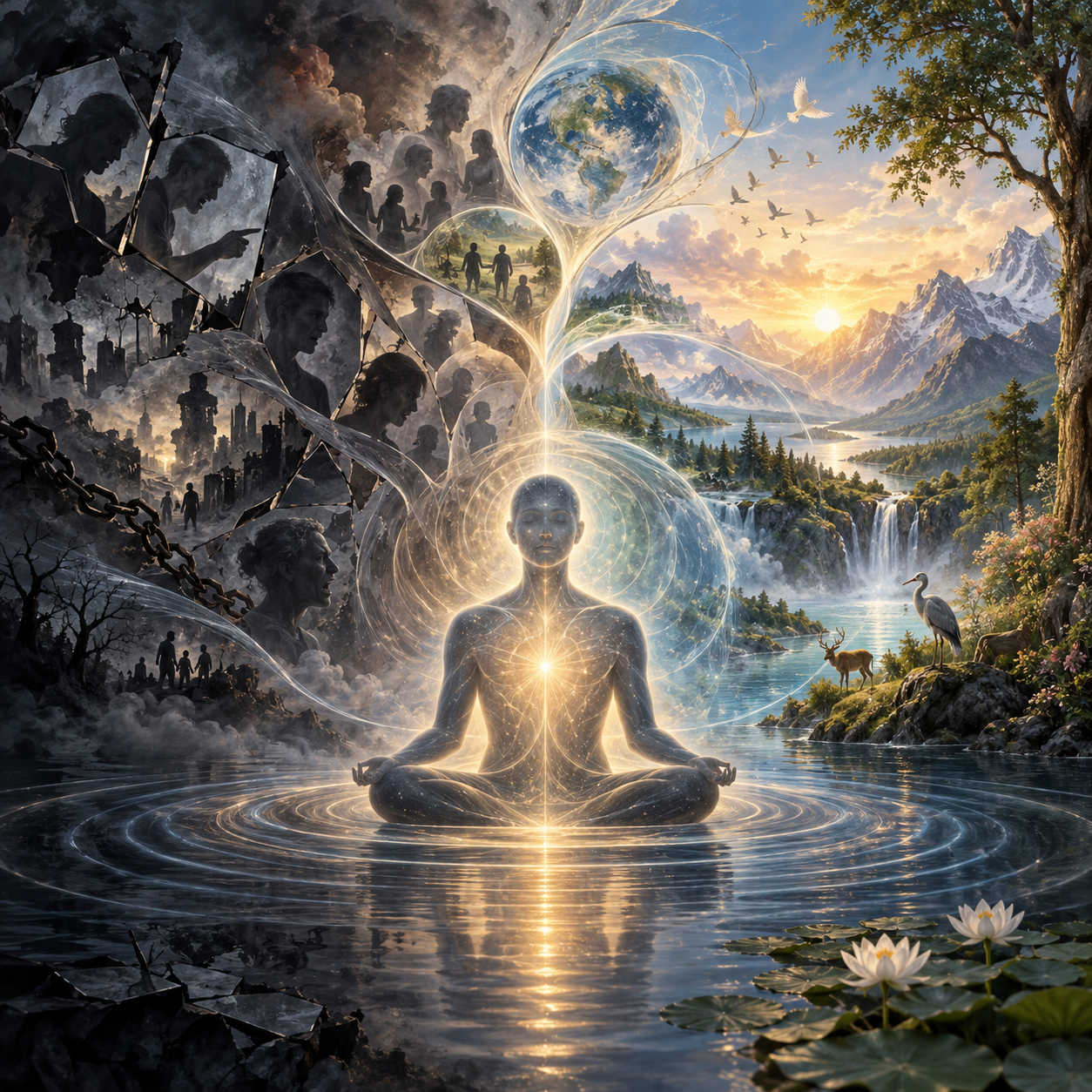
Dhammapada Reflections | Part One | Chapters One & Two
The Dhammapada opens with a radical claim: the world we experience is mind-wrought. These opening chapters explore how mind constructs the reality we inhabit, how blame and the division between self and other deepen suffering, and why heedfulness is the beginning of freedom. Along the way, the text asks us to look directly at anger, responsibility, Mara, impermanence, and the stories we build around what happens to us.
The practice is not to escape the world we have made, but to stop mistaking it for the whole of reality. When we maintain wonder, include what is actually present, and refuse to surrender responsibility for our own mind, the stream begins to change.
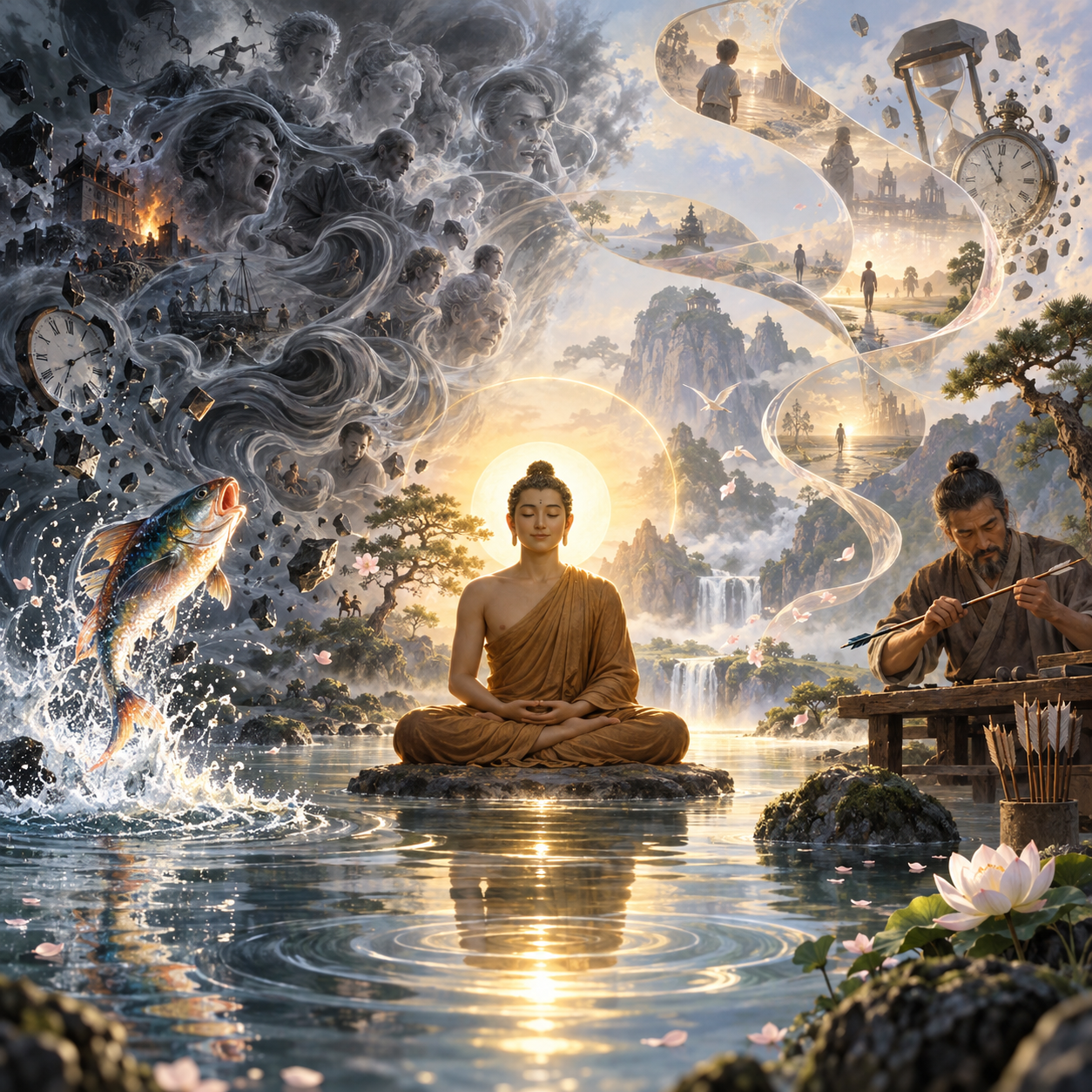
Dhammapada Reflections | Part Two | Chapter Three
The mind is restless, quick to construct, and easily carried away by the realities it creates. These verses explore how experience becomes certainty, how karmic conjecture hardens into the world we think we know, and what it means to tame the mind without suppressing it. Through the images of the fletcher straightening an arrow and the fish thrown from water, the Dhammapada points us back toward the natural ground of practice: the playful samadhi of meeting what is actually here.
Along the way, this section turns toward time, faith, and prajñā. Past and future can only appear in the boundless present, faith becomes the courage to remain in wonder rather than manufacture certainty, and wisdom begins before our explanations have hardened into knowing. The invitation is not to control every thought, but to stop allowing thought to become another place for the karmic self to live.

Dhammapada Reflections | Part Three | Chapter Four
Part Three turns to Chapter 4, “Flowers,” and asks what it means to meet the world without immediately dividing it into what belongs and what does not. The garland-maker becomes a central image: awakening is not about rejecting the flowers before us, but discerning how to work with all of them creatively. From there, the chapter explores impermanence, selective grasping, fault-finding, and the subtle ways the karmic self tries to possess what it loves.
The bee offers a different model of intimacy, taking what is needed without damaging the flower, while the lotus rising from a rubbish heap reminds us that nothing has to be pushed outside the gate before awakening can occur. Virtue and compassion are not performances we manufacture to improve the self; like fragrance, they naturally emanate when we stop clinging, include the whole field of experience, and allow what is already present to become alive.

Dhammapada Reflections | Part Four | Chapters Five & Six
Part Four turns to the fool and the wise and asks a deceptively simple question: what actually distinguishes wisdom from delusion? The fool is not merely someone who lacks intelligence, but someone who is certain of what they think they know, while the wise remain open enough to be corrected. These chapters explore the danger of knowledge hardened into certainty, the way the small self seeks recognition and security, and why even spiritual discipline can become another way of preserving the very self we are trying to see through.
Against that, the Dhammapada presents wisdom as receptivity: the capacity to taste the teaching rather than merely hold it, to receive correction without defensiveness, and to stop mistaking accumulation for awakening. Renunciation begins when we renounce the renouncer, and the farther shore is discovered not by running somewhere else but by loosening the fixed place where the karmic self insists on living.

Dhammapada Reflections | Part Five | Chapters Seven & Eight
Part Five brings the opening movement of the Dhammapada to a close by asking what freedom actually looks like when the karmic self is no longer the center of the field. The arahant is described as one whose journey is complete, not because they have escaped life, but because the need to establish a fixed identity has fallen away. The images of swans leaving the lake, birds crossing the sky without leaving a track, and the earth receiving everything without resentment all point toward a life no longer trapped by the structures it creates.
Chapter 8 then turns from attainment to measure. One word of Dharma truly encountered is worth more than a thousand empty recitations; one day lived awake is worth more than a century spent asleep. In Zen, that one word may be Mu. The teaching is not about accumulating more practice, knowledge, or merit, but about meeting this life so completely that nothing else is required to confirm it. The journey ends by coming home.

Dhammapada Reflections | Part Six | Chapters Nine & Ten
Part Six turns to evil and violence, asking what happens when the karmic world we construct becomes more compelling than the living truth in front of us. Evil begins when judgment, separation, and certainty replace direct encounter, and we begin acting from the reality we have manufactured rather than from what is actually here. Good, by contrast, arises in immediacy, through wonder, inclusion, and compassionate response.
Chapter 10 carries that same movement into violence. To harm another, we first have to make them sufficiently “other,” placing their suffering outside the field of our own life. The Dhammapada challenges that division through nonviolence, restraint, and the recognition that every act changes the stream. The practice is not passivity, but refusing to let separation, resentment, and retaliation determine what comes next.

Dhammapada Reflections | Part Seven | Chapters Eleven & Twelve
Part Seven turns to old age and the self, beginning with a truth we resist: the body is impermanent, and we keep trying to build something permanent out of what cannot remain stable. The Dhammapada’s images of the painted body, the worn chariot, and the house-builder all point toward the same problem: craving continually constructs an abode for the karmic self and then persuades us to mistake that house for home.
Chapter 12 then asks what remains when that construction is seen clearly. The created self does not disappear; it can still answer the phone, keep commitments, make mistakes, and engage the world skillfully. The practice is to use it without confusing it with our True Nature. No one else can do our practice for us, yet nothing is outside the field of that practice. Responsibility, relationship, and wisdom all meet here.

Dhammapada Reflections | Part Eight | Chapters Thirteen & Fourteen
Part Eight turns to the world and the Buddha, asking what happens when we stop confusing the karmic reality we construct with the living world itself. The Dhammapada compares that world to a bubble, a mirage, and a decorated chariot: vivid, functional, and compelling, but never as solid as we imagine. Practice becomes a matter of shifting our gaze away from the reality built by judgment and certainty and toward the Dharmakaya, the living field that has been present all along.
Chapter 14 then asks what awakening looks like when there is no fixed karmic identity left to defend. The trackless Buddha cannot be contained by the usual coordinates of self because craving no longer determines where that self must live. Here the Three Pure Precepts appear in the movement we teach through the Three Transformative Touchstones: Maintain Wonder, Include Everything, and Allow Compassion to Arise. Refuge in Buddha, Dharma, and Sangha is not an escape from life, but a return to the reality in which suffering can be seen clearly and transformed.

Dhammapada Reflections | Part Nine | Chapters Fifteen & Sixteen
Part Nine turns to happiness and affection, asking what remains when we stop demanding that the world satisfy the grasping small self. Happiness is not something we manufacture once conditions finally cooperate; it is already present before we cling. To “possess nothing” is not deprivation, but freedom from trying to secure ourselves through things, ideas, or relationships. In possessing nothing, we inherit everything.
Chapter 16 then looks closely at love. The problem is not affection itself, but what happens when love becomes ownership. Once someone or something becomes “mine,” fear and grief follow because what is possessed can be lost. Love as ownership binds; love as a verb sets everything it touches free. The section ends with the image of returning home, reminding us that the life we cultivate becomes the life we inhabit.
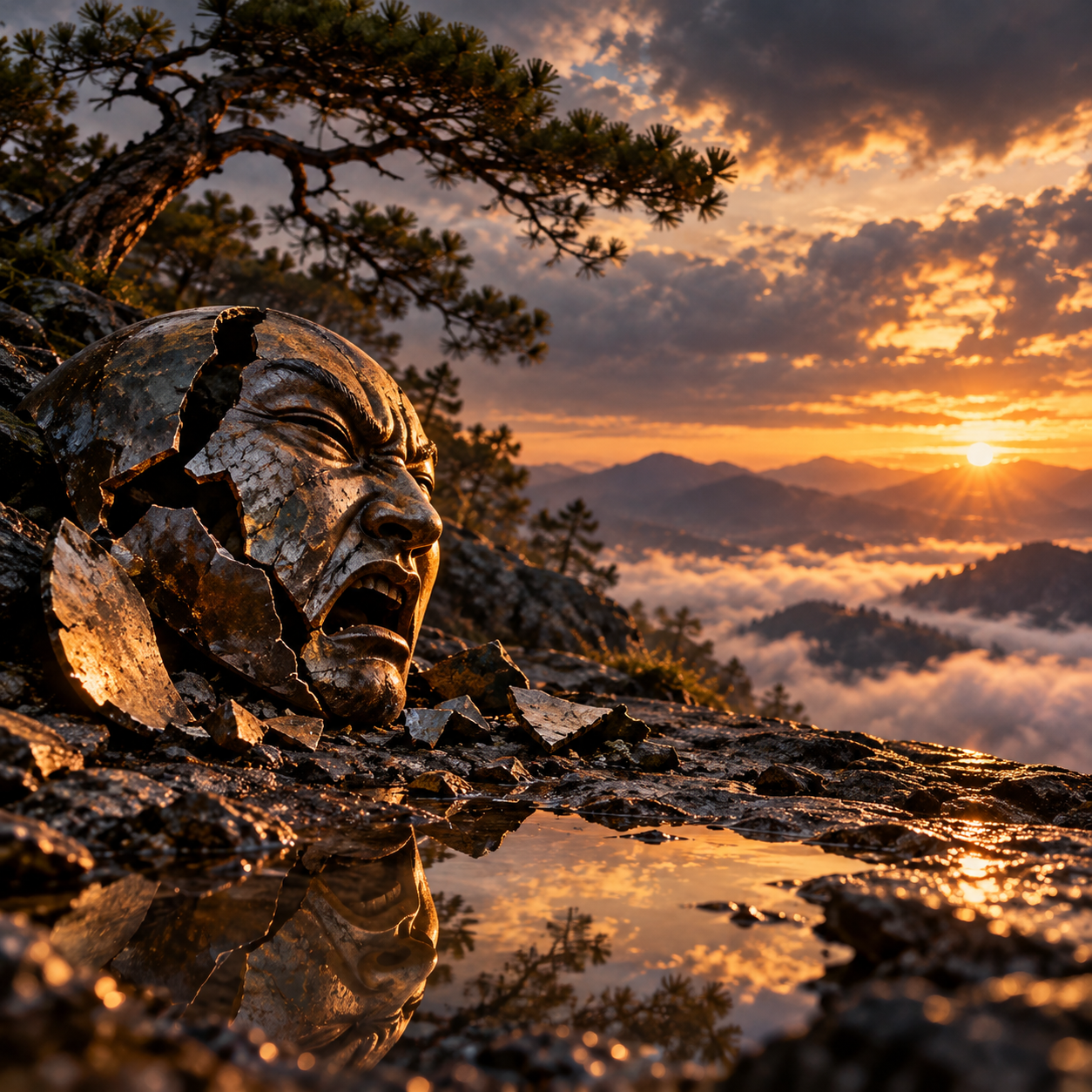
Dhammapada Reflections | Part Ten | Chapter Seventeen
Part Ten closes this movement of the Dhammapada with anger, understood as the way the karmic self does violence to the world in an attempt to force circumstances to conform to it. Anger may carry useful information, especially when something genuinely harmful is happening, but it cannot be allowed to take the reins. Practice means bowing to anger, asking what it is protecting, and then responding from wisdom rather than allowing the emotion itself to become the architect of our actions.
The chapter also turns to praise and blame, showing how much energy the constructed self spends trying to control how it is seen. We want to be understood, praised, and judged correctly, and anger often appears when others refuse to participate in the version of ourselves we are trying to preserve. The final verses bring the teaching back to body, speech, and thought: anger must be met at its source before it becomes action. Freedom begins when we can see the construction arising and choose not to hand it the reins.

Dhammapada Reflections | Part Eleven | Chapters Eighteen & Nineteen
Part XI turns to Impurity and The Just, asking what actually obscures our True Nature and what it means to see clearly. Using the images of silver and dross, rust and iron, and the island that appears when we stop drawing borders across the whole, the commentary distinguishes judgment from discernment, spiritual identity from embodied Dharma, and purification from any attempt to manufacture purity. The movement is from obscuration to seeing: the Dharmakāya was never divided, the silver was always silver, and practice is the work of no longer mistaking our karmic constructions for the living truth.

Dhammapada Reflections | Part Twelve | Chapters Twenty & Twenty-one
Part XII turns to The Path and Miscellaneous, asking what it means to actually practice rather than merely understand the teachings. The commentary moves through impermanence, unsatisfactoriness, not-self, and the image of cutting down the forest but not the tree, distinguishing meditation from Mentation-practice and showing how spiritual effort itself can become violence when we try to force life into conformity with an idea of awakening. The path does not lead away from the conditions already present; it steers us directly into them, where body, speech, mind, relationship, craving, and mortality become the very material of practice. The Buddhas and Ancestors can point the way, but we have to walk.

Dhammapada Reflections | Part Thirteen | Chapters Twenty-Two & Twenty-Three
Part XIII turns to The State of Woe and The Elephant, tracing how suffering deepens when we mistake the reflections of our karmic lens for reality and then refuse responsibility for what we create. The commentary moves from lying, blame, false spiritual identity, and distorted moral perception into the image of the elephant as the vast field of karmic causes and conditions already present in this life. Practice is not fighting those conditions or wishing for another life, but learning them intimately enough to work with them skillfully, with the help of teachers and Sangha when they are faithful to the work of ameliorating suffering. We do not escape the elephant, and we do not defeat it. We learn how to ride.

Dhammapada Reflections | Part Fourteen | Chapter Twenty-Four
Part XIV turns to Craving, tracing the movement by which the karmic self tries to renegotiate reality: give me what I want, preserve what I need to remain, or make what I cannot tolerate disappear. The commentary moves through the creeper, the tree that grows back from an uncut root, the trapped hare, and finally the spider caught in its own self-spun web. Craving is not merely appetite; it is the activity that widens the gap between things-as-they-are and things-as-we-think-they-should-be. Practice does not destroy experience or manufacture a purer life. It sees the root, recognizes the web as our own construction, and releases the demand that the living world become something else before we are willing to inhabit it.

Dhammapada Reflections | Part Fifteen | Chapters Twenty-Five & Twenty-Six
Part XV turns to The Monk and The Holy Man, bringing the entire commentary back to embodied practice. Restraint is understood not as suppression but as not adding the karmic pendulum of longing and aversion to what has already appeared. Meditation places attention with intention, widening our gaze until both intrinsic wholeness and the conditioned narrative can be included and engaged with wisdom. The final chapter then strips holiness of its outward refuges: robes, lineage, austerity, and spiritual identity cannot substitute for Dharma becoming activity. The culmination is the trackless person, no longer turning practice into another fixed self, but meeting what arises through body, speech, and mind as working Dharma. The journey that began with a mind fashioning worlds ends with a new world waiting for us: this very one, finally lived.